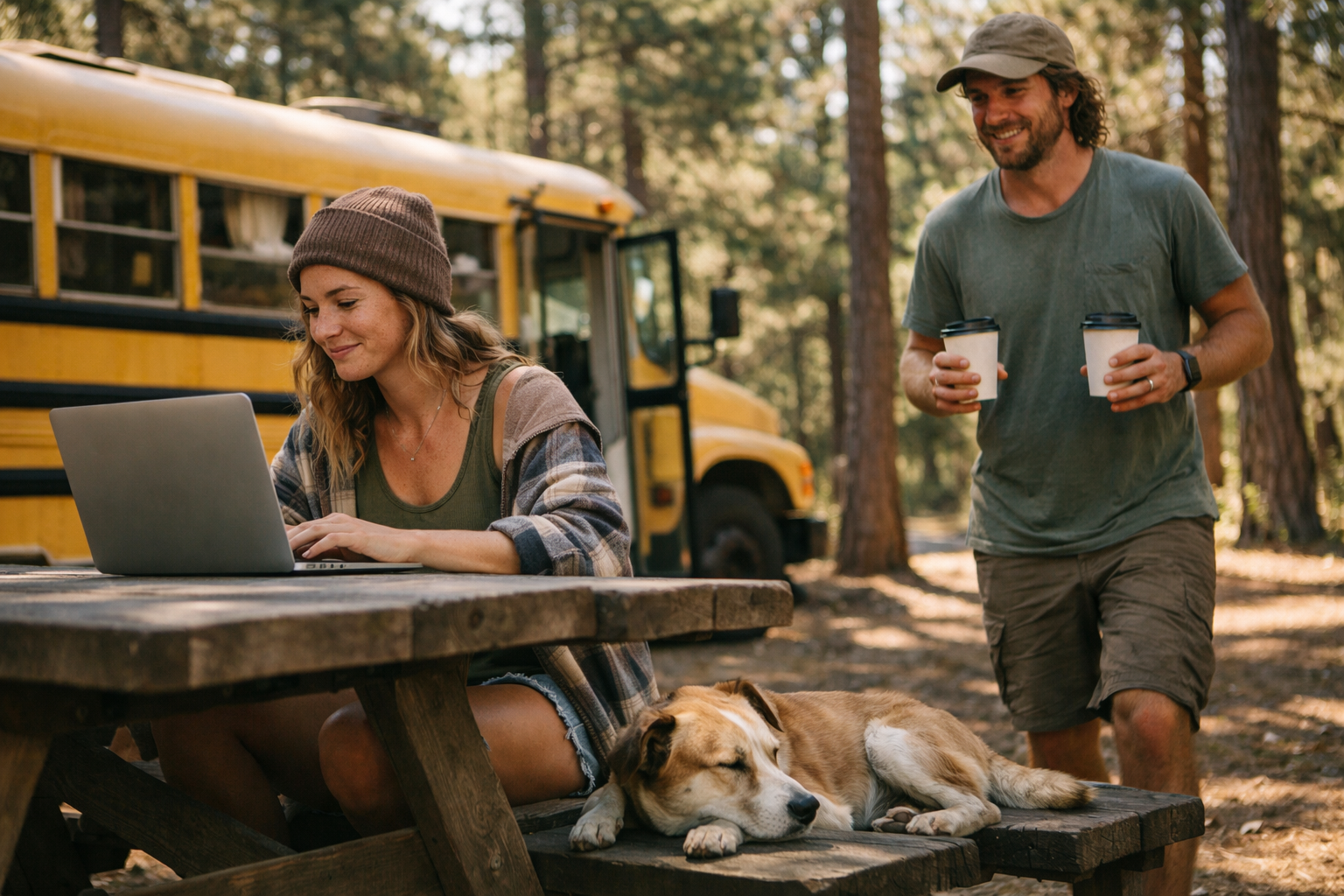
The 12 Best States for Van Life in 2026, Ranked
Ranked by public land, climate, and how hard it is to find a legal place to sleep.
There is no single best state for van life, but there is a clear top tier. The states that work are the ones with a lot of public land, a climate that is livable for part of the year, and towns that do not chase you off at 2am.
That combination is mostly a western thing. The federal government manages a large share of the land in the West, and most of that land allows dispersed camping for free. East of the Rockies, public land gets scarce fast and van life shifts from "park anywhere" to "find a legal spot."
Here are twelve states ranked by how easy they make full-time van life, with the honest catch for each one.
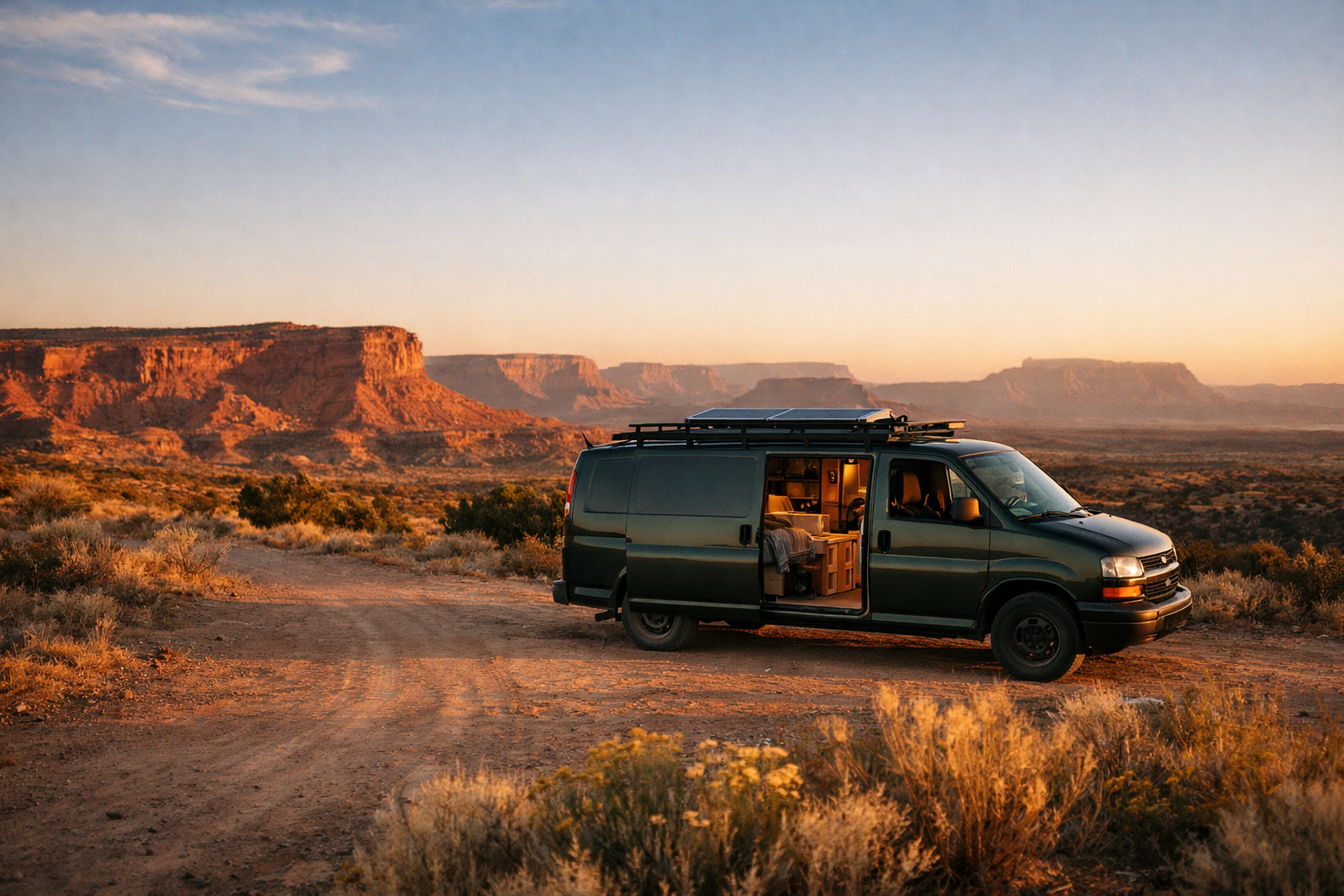
1. Arizona
Arizona is the center of gravity for American van life, and it is not close. The state has enormous tracts of Bureau of Land Management land, and most of it allows free dispersed camping for up to 14 days.
Winter is the reason. From November through March, the desert around Quartzsite, Yuma and Ajo fills with thousands of nomads. Quartzsite in January is the single densest concentration of van dwellers in the country. If you want to meet people, that is where you go.
Arizona also has elevation, which matters more than people expect. When Phoenix hits 110 degrees, the pine country around Flagstaff and Prescott sits 25 to 30 degrees cooler at around 7,000 feet. You can spend a whole year in Arizona if you move up and down instead of north and south.
The catch: the low desert is genuinely dangerous from May through September. Overnight lows stay in the 80s and 90s, which means you cannot sleep without air conditioning, which means you need shore power or a large battery bank.
2. Nevada
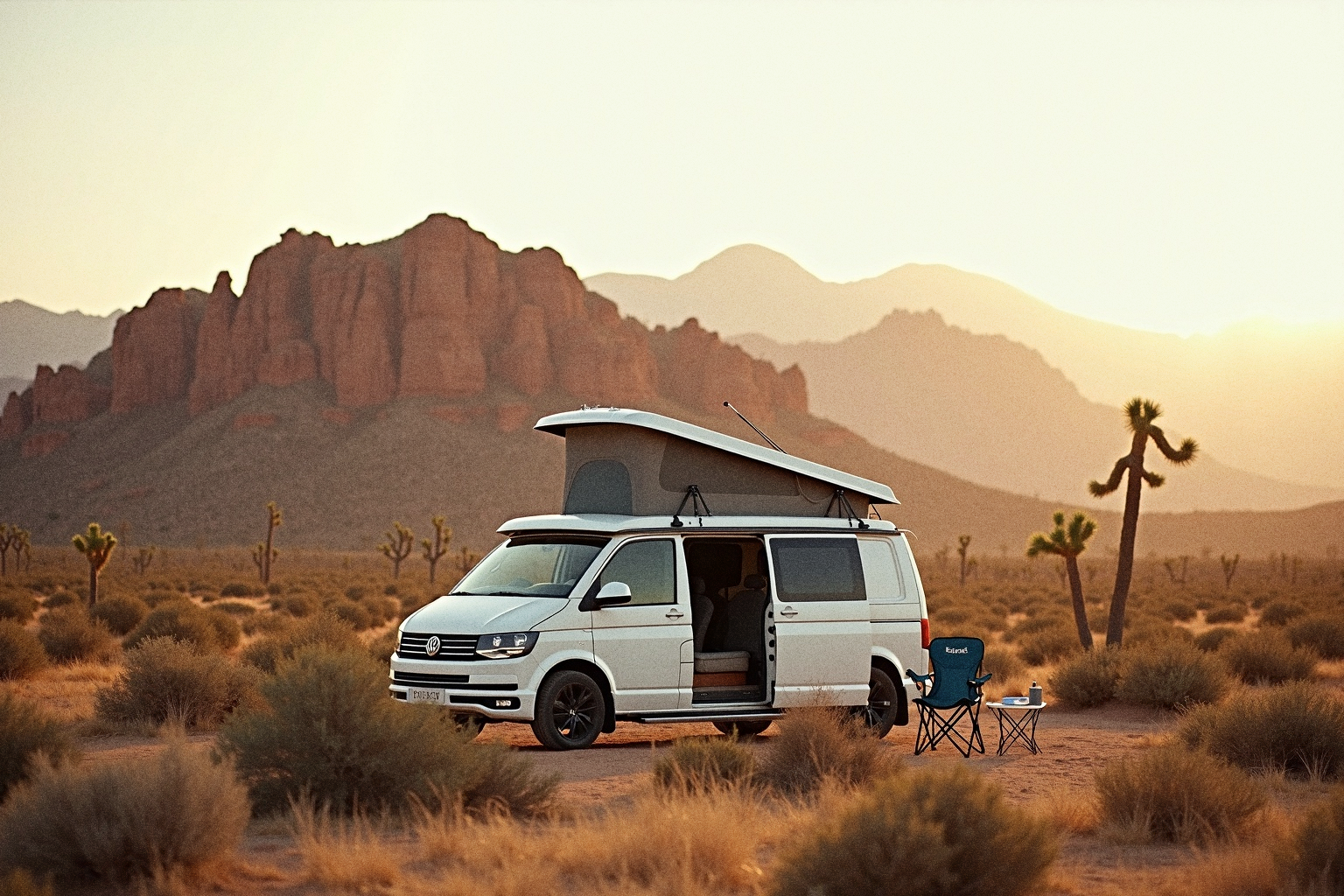
Nevada is the most federally managed state in the country. The large majority of it is public land, most of it BLM, and most of that is open to camping.
What that means practically is that you can drive almost any dirt road off a Nevada highway and legally sleep at the end of it. There is very little competition for space outside the Las Vegas and Reno metro areas.
Both cities are useful. Las Vegas and Reno give you cheap fuel, 24-hour everything, gyms for showers, and real mail service. Then you drive twenty minutes and you are alone again.
The catch: a lot of Nevada is empty in a way that is hard to romanticize. Long distances between services, patchy cell coverage, and very little shade. Carry more water than you think you need.
3. Utah
Utah has the best scenery-to-effort ratio in the country. Moab, the San Rafael Swell, the roads around Escalante and the areas outside all five national parks have well-established dispersed camping.
Spring and fall are the seasons. March through May and September through early November give you comfortable days, cold but survivable nights, and far fewer people than the summer crush.
Salt Lake City is an underrated base. It has a real airport, real medical care, and mountains fifteen minutes from downtown.
The catch: the famous spots near Moab have been loved to death. Enforcement has tightened, some areas now require permits or designated sites, and the free-for-all era around the national parks is largely over. Go one valley further out.
4. Oregon
Oregon is the best summer state and one of the best all-round. The Deschutes National Forest outside Bend has some of the most reliable free camping in the West, and the state is dense with national forest roads.
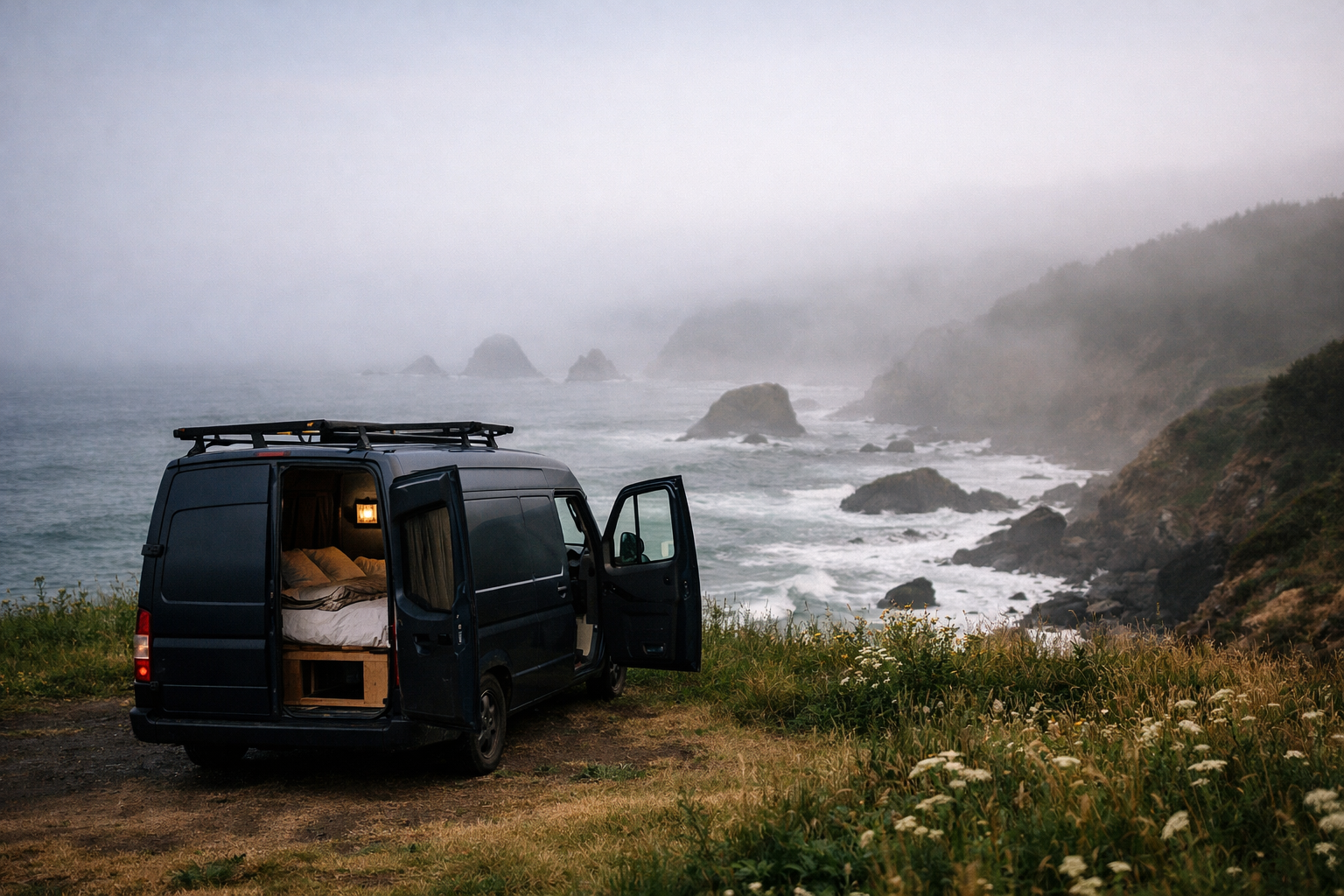
The coast is the other draw. Oregon's coastline is legally public for its entire length, and there is a chain of state parks and pullouts that make a slow coastal drive genuinely pleasant.
Bend deserves its reputation. It is a real town with coworking, climbing, breweries and a large population of people living in vehicles by choice.
The catch: it rains from October through May, sometimes for weeks. Living in a van through an Oregon winter is a damp, dark experience that a lot of people quit over. Fire season also closes large areas of forest in late summer.
5. California
California has more variety than any other state. You can be in the Alabama Hills under the Sierra crest, on the Lost Coast, in Joshua Tree, or in a redwood forest, all within one state.
The public land is there. Inyo National Forest, the eastern Sierra corridor along Highway 395, and the desert around Ridgecrest and Barstow are all reliable.
The catch: cities. California enforces overnight parking rules more aggressively than anywhere else in the West, and Los Angeles, San Francisco and San Diego are all hard places to sleep in a vehicle. Fuel is the most expensive in the country. Fire closures are severe and unpredictable.
6. New Mexico
New Mexico is the quiet answer. It has most of Arizona's advantages with a fraction of the crowds.
The Gila National Forest is enormous and nearly empty. City of Rocks, the area around Silver City, and the roads outside Taos and Santa Fe all have easy dispersed camping. Elevation again does the work: southern New Mexico is mild in winter, and the northern mountains are comfortable in summer.
Costs are low. Fuel, groceries and campground fees are all cheaper than in neighboring states.
The catch: services are thin outside Albuquerque and Santa Fe. Cell coverage in the Gila is close to nonexistent, which is a problem if you work remotely.
7. Colorado
Colorado is a summer state and an excellent one. The national forests around Buena Vista, Salida, Gunnison and Durango have extensive dispersed camping, much of it above 9,000 feet where it stays cool through August.
The nomad density is high in July and August, so it is a good place to actually meet people rather than just camp alone.
The catch: the Front Range corridor from Denver to Fort Collins is crowded and heavily regulated, and popular dispersed areas near I-70 fill by Friday afternoon. Winter shuts most of the high country entirely.
8. Montana
Montana is uncrowded in a way that most western states no longer are. The Flathead, Kootenai and Custer Gallatin national forests all have easy free camping, and the state has a relaxed attitude toward people sleeping in vehicles.
Bozeman and Missoula are both good bases with real coworking, climbing gyms and grocery stores.
The catch: the season is short. Good van life in Montana runs roughly June through September. Everything else is cold enough that you need a serious heating setup and good insulation.
9. Washington
Washington is Oregon with more mountains and slightly more hassle. The Olympic Peninsula, the North Cascades and the forest roads east of the crest are all excellent from June through September.
Eastern Washington is the part people forget. It is dry, sunny and far emptier than the west side, and it extends the usable season by a month on either end.
The catch: the same winter rain as Oregon, plus more restrictive rules near Seattle. Many forest roads need clearance you may not have in a low van.
10. Idaho
Idaho is the most underrated state on this list. The Sawtooths, the Salmon River corridor and the panhandle forests all have abundant free camping and far fewer people than Colorado or Utah.
Idaho also has more accessible natural hot springs than any other state, which matters more than you would think when you do not have a shower.
The catch: short season, limited services, and long drives between towns. Fire season can close a lot of the state in August.
11. Texas
Texas earns its spot on winter alone. The Big Bend region, the Davis Mountains and the Hill Country west of Austin are comfortable from November through March, and Texas has more legal overnight parking tolerance than most states.
Austin, San Antonio and El Paso all work as resupply bases with cheap fuel.
The catch: most Texas land is private. Public land is limited to a handful of national forests and Big Bend, so the "park anywhere" freedom of the Mountain West does not exist here. Summer is brutal statewide.
12. Wyoming
Wyoming is the least populated state in the country and it feels like it. The Bighorns, the Wind River range and the national forest land outside Jackson all offer free camping with genuine solitude.
It is also the overflow valve for Grand Teton and Yellowstone. When the parks are full, the surrounding forest land is where everyone actually sleeps.
The catch: wind. Constant, exhausting wind that makes cooking outside difficult and rocks the van all night. The season is short and the winters are severe.
How to actually pick
Most full-timers do not pick one state. They follow a loop: Southwest from November to March, Utah and Colorado in spring, the Pacific Northwest and northern Rockies in summer, then back south in the fall.
If you are choosing a first state, pick Arizona in winter or Oregon in summer. Both have high nomad density, which means help is nearby when something breaks and there are people to talk to when the novelty wears off.
If you are choosing a base state for mail, insurance and vehicle registration, that is a different question entirely. South Dakota, Texas and Florida are the three most common domicile states for full-time nomads, largely because of no state income tax and straightforward residency requirements.
Frequently Asked Questions
What is the best state for van life?
Arizona, because of the combination of vast BLM land open to free dispersed camping, mild winters in the low desert, and cool pine country at elevation for summer. It also has the highest concentration of other van dwellers in the country, which matters if you want community rather than just campsites.
Which states have the most free camping for van life?
Nevada, Arizona, Utah, Oregon and New Mexico. All five have large amounts of Bureau of Land Management and national forest land that allows free dispersed camping, usually for up to 14 days in one spot.
What is the best state for van life in winter?
Arizona for the low desert around Quartzsite and Yuma, followed by Texas for the Big Bend region and southern New Mexico. All three stay mild from November through March.
What is the best state for van life in summer?
Oregon, Montana, Colorado, Washington and Idaho. Elevation and latitude both help, and national forest land in all five stays comfortable from June through September.
Are there good states for van life on the East Coast?
Fewer, because public land is scarce east of the Rockies. North Carolina around the Pisgah National Forest and parts of Maine and West Virginia work, but you should expect to pay for campgrounds far more often than you would out west.
Which state should I use as my domicile for van life?
South Dakota, Texas and Florida are the three most common choices for full-time nomads. All three have no state income tax and straightforward residency requirements for people without a fixed address. This is a separate decision from where you actually travel.
Find nomads near you
nomatch is a verified community of van lifers, RV travelers, and digital nomads. See who's nearby, what they're down for, and connect.