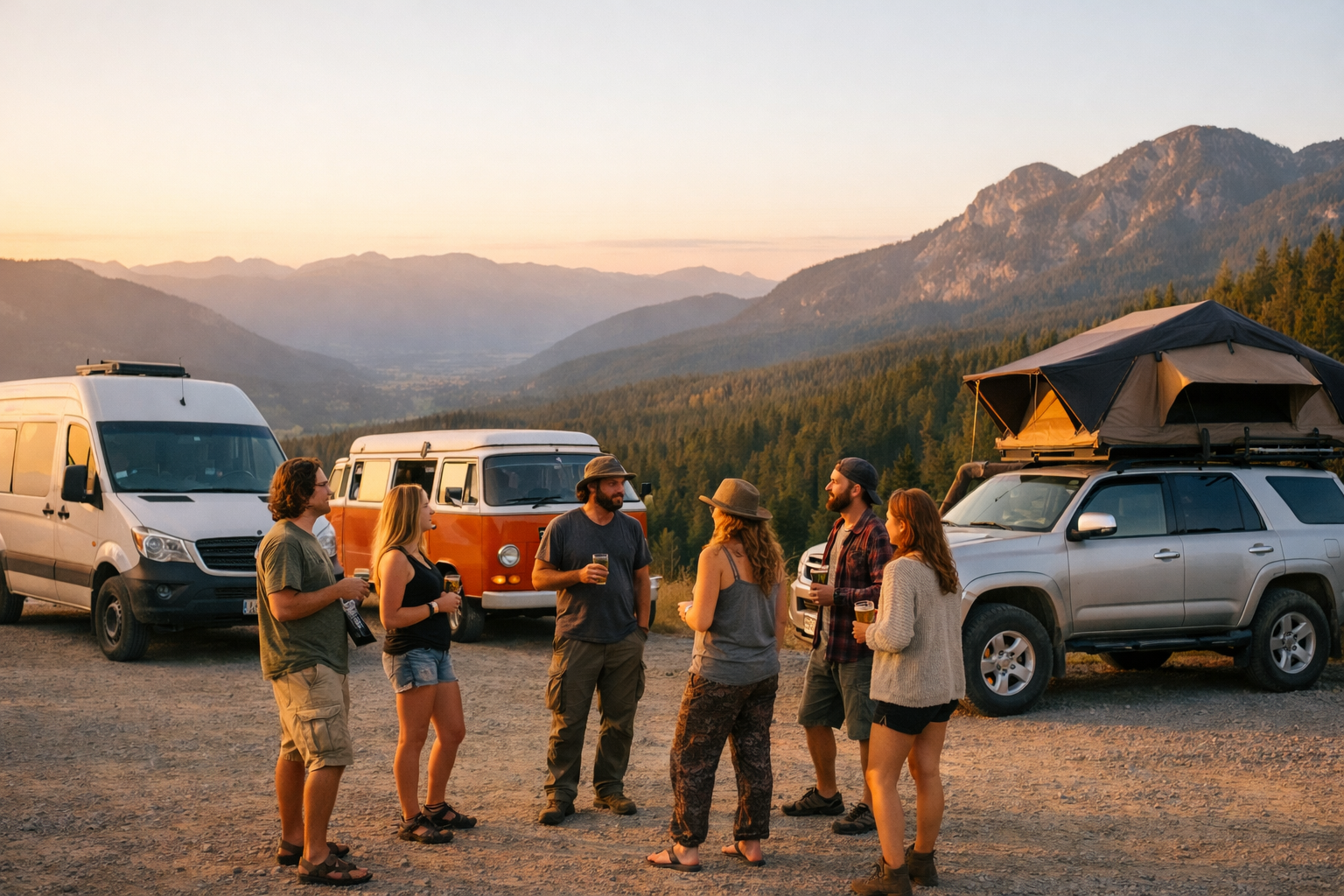
How to Meet Other Van Lifers (Ranked by What Works)
Gatherings, boondocking clusters, nomad apps, and the parking lot wave — ranked by what actually works for finding your people on the road.
The short answer
The most effective ways to meet other van lifers in 2026, ranked by how reliably they produce real connections:
- Van life gatherings — Overland Expo West, Descend on Bend, Rubber Tramp Rendezvous
- Boondocking clusters on BLM land — Quartzsite, Sedona, Bend, Flagstaff (rotates by season)
- Purpose-built nomad apps with map-based discovery and verification
- Coworking spaces and coffee shops in nomad-popular towns
- Volunteer / work exchange programs like Workaway and campground hosting
- The parking lot wave — low commitment, high frequency
There are hundreds of thousands of people living in vans, buses, RVs, and converted vehicles across the US right now. They're at the same trailheads, the same BLM land, the same coffee shops, the same Walmart parking lots. And yet, finding them can feel impossible.
The problem isn't that nomads don't exist near you. It's that there's no reliable way to identify them. That Sprinter van in the parking lot might be a nomad's home or a contractor's work truck. The person at the next campsite might be full-timing or just on a weekend trip.
This guide covers every method that actually works for meeting other van lifers, from in-person gatherings to digital tools, ranked by how likely they are to result in real friendships.
1. Van Life Gatherings and Events
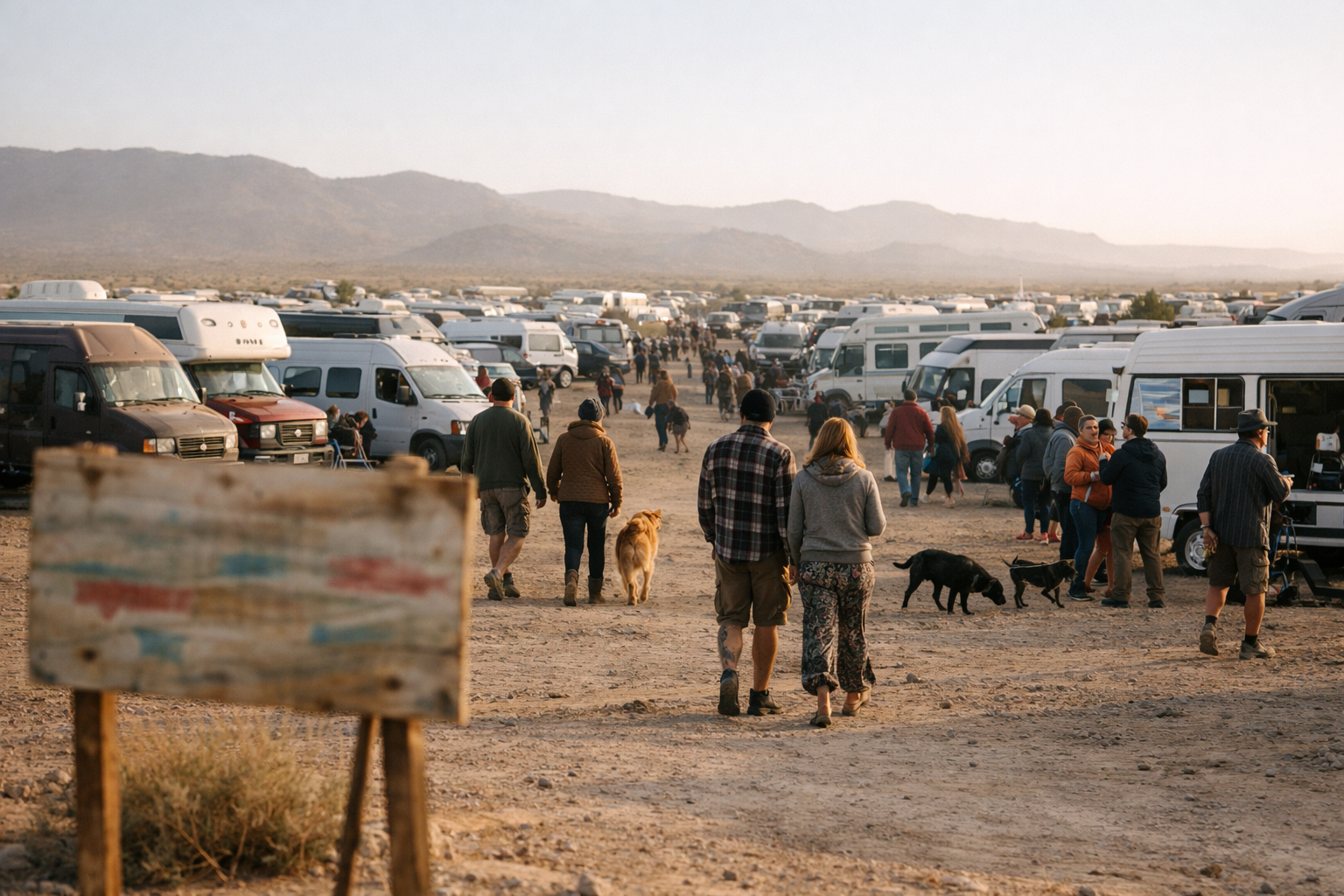
Effectiveness: very high. Nothing beats showing up to a place where hundreds or thousands of nomads are gathered on purpose.
Major annual events
These are the big ones. Mark your calendar and plan your route around at least one or two per year.
- Overland Expo West (Flagstaff, AZ — May) — The biggest. 28,000+ attendees. A mix of van lifers, overlanders, and adventure travelers. Great for meeting people across the nomad spectrum.
- Descend on Bend (Bend, OR — late June) — Van-life-specific. More community-focused, smaller, and easier to make genuine connections. Think hundreds, not thousands.
- Rubber Tramp Rendezvous (Quartzsite, AZ — January) — Free, grassroots, and legendary. Primarily budget nomads and full-timers. The original van life gathering.
- Overland Expo East (Arrington, VA — October) — The East Coast version. Growing fast.
- Adventure Van Expo (multiple locations) — Van-specific expos focused on builds, gear, and community.
Pro tip
Arrive a day early and camp in the overflow/free areas nearby. That's where the real community forms. The people who show up early are the ones most interested in meeting others.
Regional and grassroots meetups
Beyond the big events, there are dozens of smaller regional gatherings happening year-round. Van life Facebook groups in specific states often organize monthly or quarterly meetups. These are smaller (20-50 people) and often more intimate than the big expos.
Search for "[your region] van life meetup" on Facebook, Instagram, and Reddit. Many are organized informally and only promoted through social media.
2. Boondocking Clusters
Effectiveness: high. Nomads naturally cluster in the same free camping areas, especially in the Southwest during winter.
If you're boondocking on BLM land and you see three other converted vehicles, congratulations, you've found your people. The etiquette is simple: park a respectful distance away, walk over in the evening, and say hi. Nobody boondocking on public land in a converted vehicle is going to be confused about why you're introducing yourself.
The hot spots (by season)
- Winter (Nov-Mar): Quartzsite AZ, Slab City CA, Anza-Borrego CA, southern New Mexico BLM land, Baja Mexico
- Spring (Mar-May): Sedona AZ, Moab UT, Joshua Tree CA (shoulder season), southern Colorado
- Summer (Jun-Aug): Bend OR, Tahoe area CA/NV, Montana, Pacific Northwest coast, Colorado mountains
- Fall (Sep-Nov): Flagstaff AZ, New Mexico, eastern Sierra CA, Utah canyon country
These areas have high nomad density because they offer free or cheap camping, good weather for the season, and reliable cell service. Go where the conditions are best and you'll find other nomads already there.
3. Apps and Digital Tools
Effectiveness: medium to high, depending on the tool.
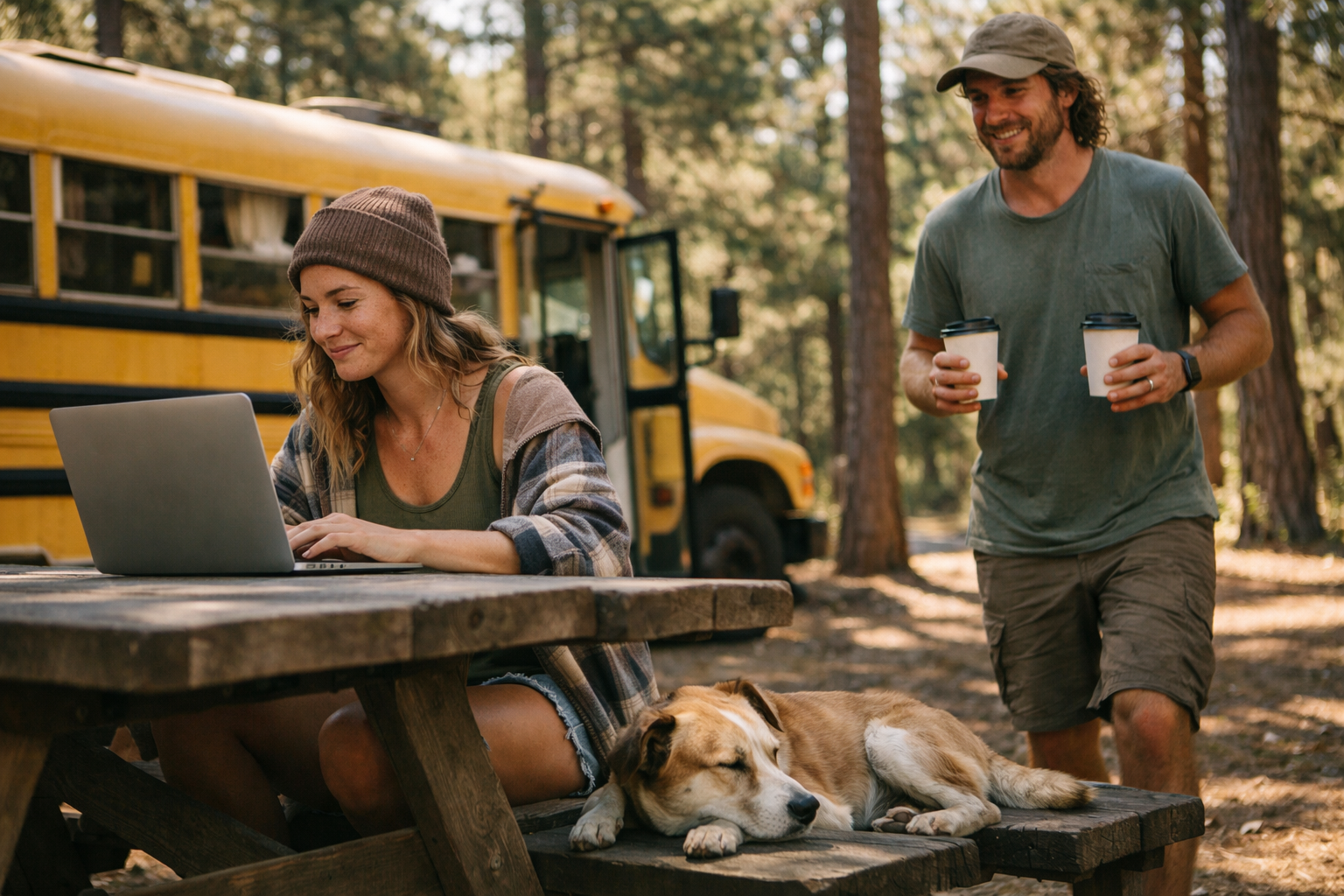
The challenge with digital tools is that most weren't built for people who move. Dating apps, friend-finding apps, and social platforms all assume you have a fixed address. Here's what actually works for the nomad use case:
Purpose-built nomad apps
A new generation of apps is being built specifically for mobile people. These work because they understand that your location changes constantly and your social needs are immediate. You don't want to plan something for next week. You want to know who's nearby right now.
The key features to look for: map-based discovery (not swipe cards), verification of some kind (to filter out non-nomads), and activity matching (what you're down for today, not a personality profile).
iOverlander and Campendium
These are camping apps, not social apps. But they have community features — reviews, comments, and check-ins — that can help you figure out where nomads are clustering. If a free campsite has 15 recent reviews from full-timers, that's a good sign.
Reddit and Facebook groups
Subreddits like r/vandwellers, r/gorving, and r/digitalnomad have active communities. Facebook groups like "Van Life" and regional groups ("PNW Van Lifers," "Southwest Nomads") are where many informal meetups get organized.
The limitation is that these are primarily online communities. They're great for information but less great for in-person meetups unless someone actively organizes one.
Instagram and TikTok
Following van life hashtags and creators can help you discover gatherings and hotspots. Some nomads share their general location in stories and are open to meetups. DM culture varies, some creators are happy to meet up, others are overwhelmed by messages.
4. The Parking Lot Wave
Effectiveness: medium. Low commitment, high frequency.
The parking lot wave is the universal van lifer greeting. You see a converted vehicle, you wave. If they wave back, you've acknowledged each other. If the vibe is right, a wave turns into a conversation.
This sounds simple because it is. The van life wave works because it has zero social risk. You're not asking someone to hang out. You're acknowledging a shared lifestyle. Most of the time it stays at a wave. But sometimes it turns into "hey, where are you headed?" and that turns into "want to caravan?" and that turns into a friendship.
Good conversation starters
- "Is that a DIY build?" (works for any non-standard vehicle)
- "How's the signal out here?" (immediately identifies you as someone who cares about cell service, meaning a nomad)
- "I'm making a coffee run, need anything?" (disarming and friendly)
- "Are you full-timing?" (direct, and other nomads love this question)
5. Coworking Spaces and Coffee Shops
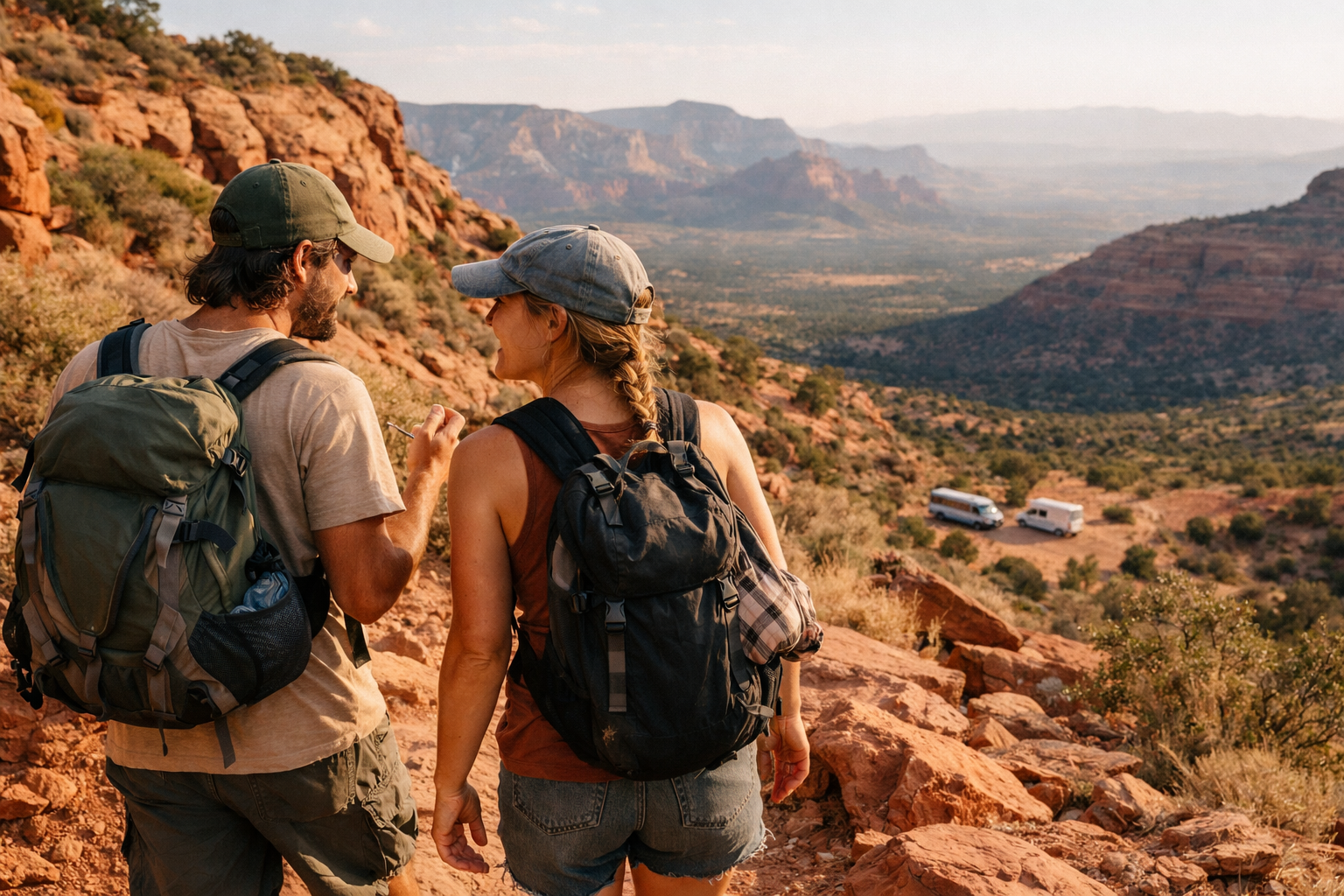
Effectiveness: medium. Good for finding digital nomads specifically.
If you work remotely, coworking spaces in nomad-popular towns are natural gathering spots. Places like Bend, Sedona, Asheville, and Tulum have coworking spaces where a significant percentage of the members are traveling. You'll recognize them — they're the ones with the PO box addresses and the tan lines.
Coffee shops work similarly but are less reliable. The trick is finding the specific coffee shop in each town where nomads congregate. Ask in local Facebook groups or subreddits. Every nomad-popular town has one.
6. Volunteer and Work Exchange
Effectiveness: high for deep connections. Lower volume but higher quality.
Programs like Workaway, WWOOF, Harvest Hosts, and campground hosting put you in close proximity with other travelers for extended periods. When you're working alongside someone for a week, you get past the small talk fast.
Campground hosting in particular attracts a lot of full-time RVers and van lifers. You work 15-20 hours a week in exchange for a free site, and you're surrounded by other mobile people doing the same thing.
Making It Stick
Meeting van lifers is the easy part. The harder part is turning those meetings into lasting connections when everyone is moving in different directions.
A few things that help:
- Exchange multiple contact methods. Instagram, phone number, and whatever messaging app you prefer. People disappear from one platform but stay active on another.
- Loosely coordinate routes. You don't need to caravan, but knowing someone is heading the same general direction means you might cross paths again in a few weeks.
- Follow through on the "let's meet up" text. When you see someone you met is nearby, actually reach out. The casual "hey I'm in your area" message is how nomad friendships survive distance.
- Stay longer. If you meet great people, extend your stay. The rig will still be there. The road will still be there. But this moment with these people might not come around again.
The nomad community is real, it's warm, and it's growing. You just have to make yourself findable.
Frequently Asked Questions
What is the best way to meet other van lifers?
The most effective way is attending van life gatherings like Overland Expo West (Flagstaff, AZ) or Descend on Bend (Oregon). These events concentrate thousands of nomads in one place. The next-best methods are boondocking on BLM land in known nomad clusters (Quartzsite AZ in winter, Sedona AZ in spring, Bend OR in summer) and using purpose-built nomad apps with map-based discovery and verification.
Where do van lifers hang out?
Van lifers cluster predictably by season. In winter: Quartzsite AZ, Slab City CA, Anza-Borrego CA, southern New Mexico BLM land, and Baja Mexico. In spring: Sedona AZ, Moab UT, Joshua Tree CA. In summer: Bend OR, Tahoe, Montana, Pacific Northwest coast, Colorado mountains. In fall: Flagstaff AZ, New Mexico, eastern Sierra CA, and Utah canyon country. They also gather at coworking spaces in nomad-popular towns like Bend, Sedona, Asheville, and Tulum.
What is the best app for meeting van lifers?
The best apps for meeting van lifers are purpose-built nomad apps with map-based discovery (not swipe cards), verification to filter out non-nomads, and activity matching for what you're down for today. nomatch (iOS and Android) is built for this exact use case. iOverlander and Campendium are camping apps with community features that can show you where nomads are clustering. Reddit (r/vandwellers) and regional Facebook groups help with information but rarely produce in-person meetups directly.
How do you start a conversation with another van lifer?
Start with a low-risk parking lot wave. If they wave back, you can approach with a low-stakes question like "Is that a DIY build?", "How's the cell signal out here?", "I'm making a coffee run, need anything?", or the direct "Are you full-timing?" These work because they immediately identify you as a fellow nomad who cares about nomad-specific things. Most full-timers are happy to talk because they're often as community-starved as you are.
Are there van life meetups for solo travelers?
Yes. Most major van life events explicitly welcome solo travelers, and Rubber Tramp Rendezvous (RTR) in Quartzsite, AZ each January is particularly known for solo nomads. Regional Facebook groups often organize smaller solo-friendly meetups. For solo female van lifers specifically, dedicated communities exist on Facebook (Solo Female Van Dwellers) and through Bob Wells's HOWA-affiliated gatherings. Verification-gated apps like nomatch are also useful for solo travelers because the membership filter reduces creep risk.
Do I need to attend Overland Expo to meet van lifers?
No. Overland Expo West (28,000+ attendees) is the largest gathering, but smaller events like Descend on Bend, VanFest Cape Cod, and regional grassroots meetups produce more genuine connections per attendee. Year-round, boondocking clusters in the Southwest reliably contain dozens of full-time nomads. If you can't attend events at all, map-based nomad apps and coworking spaces in nomad-popular towns are the best alternatives.
What is the parking lot wave?
The parking lot wave is the universal van lifer greeting — when one converted vehicle passes or parks near another, the drivers wave to acknowledge each other. It works because it has zero social risk: you're not asking anyone to hang out, you're just acknowledging a shared lifestyle. Most waves stay at a wave, but sometimes they turn into "where are you headed?" which turns into "want to caravan?" which turns into a friendship.
Make yourself findable
nomatch puts every verified nomad on a map. See who's nearby, what they're down for today, and wave to connect. No swiping, no chat — just nomads finding each other.