

Van Life Loneliness Is Real: Here's What Actually Helps
The freedom is incredible. The sunsets are unmatched. But nobody warns you about the quiet parts.
You're parked somewhere beautiful. The kind of place people save as their phone wallpaper. The sun is going down, you've got coffee, and the view stretches to the horizon.
And you're completely alone.
Not the romantic kind of alone that looks good on Instagram. The kind where you realize you haven't had a real conversation in four days. Where the highlight of your social life is small talk with a gas station cashier. Where you catch yourself talking to your van like it's going to answer.
If this sounds familiar, you're not broken. You're just a nomad.
Why Van Life Loneliness Hits Different
Loneliness isn't unique to van life, obviously. But the nomad version has a specific flavor that stationary people don't quite understand.

You're surrounded by people who are staying put
Walk into any coffee shop in any small town and you'll see friend groups, coworkers, regulars who know each other by name. You're the stranger. Every single day, in every new place, you start from zero. There's no regulars table for you because you won't be here next week.
The friends you make are temporary by default
You meet someone amazing at a campsite. You hang out for two days. You swap Instagrams and promise to meet up again. Then they head north and you head south and you both know the "let's meet up in Sedona" text is probably never going to happen.
This isn't a failure of the friendship. It's the geometry of the lifestyle. Everyone is moving in different directions at different speeds. The connections are real but the logistics are brutal.
Social media makes it worse
Your feed is full of van lifers who seem to always be with someone. Couples cooking together in their Sprinter. Groups of four vans caravanning through Utah. Meanwhile you're eating cold leftovers alone in a Walmart parking lot at 9 PM.
The comparison trap is vicious because you're already vulnerable. You left your support system behind on purpose. Seeing other people apparently thriving in the exact situation where you're struggling can make you question the whole decision.
What Experienced Nomads Actually Do About It
Here's the thing nobody tells you: most long-term nomads went through this exact phase. The ones who made it past year one figured out specific strategies that work. Not "just put yourself out there" advice. Actual, concrete things.
1. Go where the nomads already are
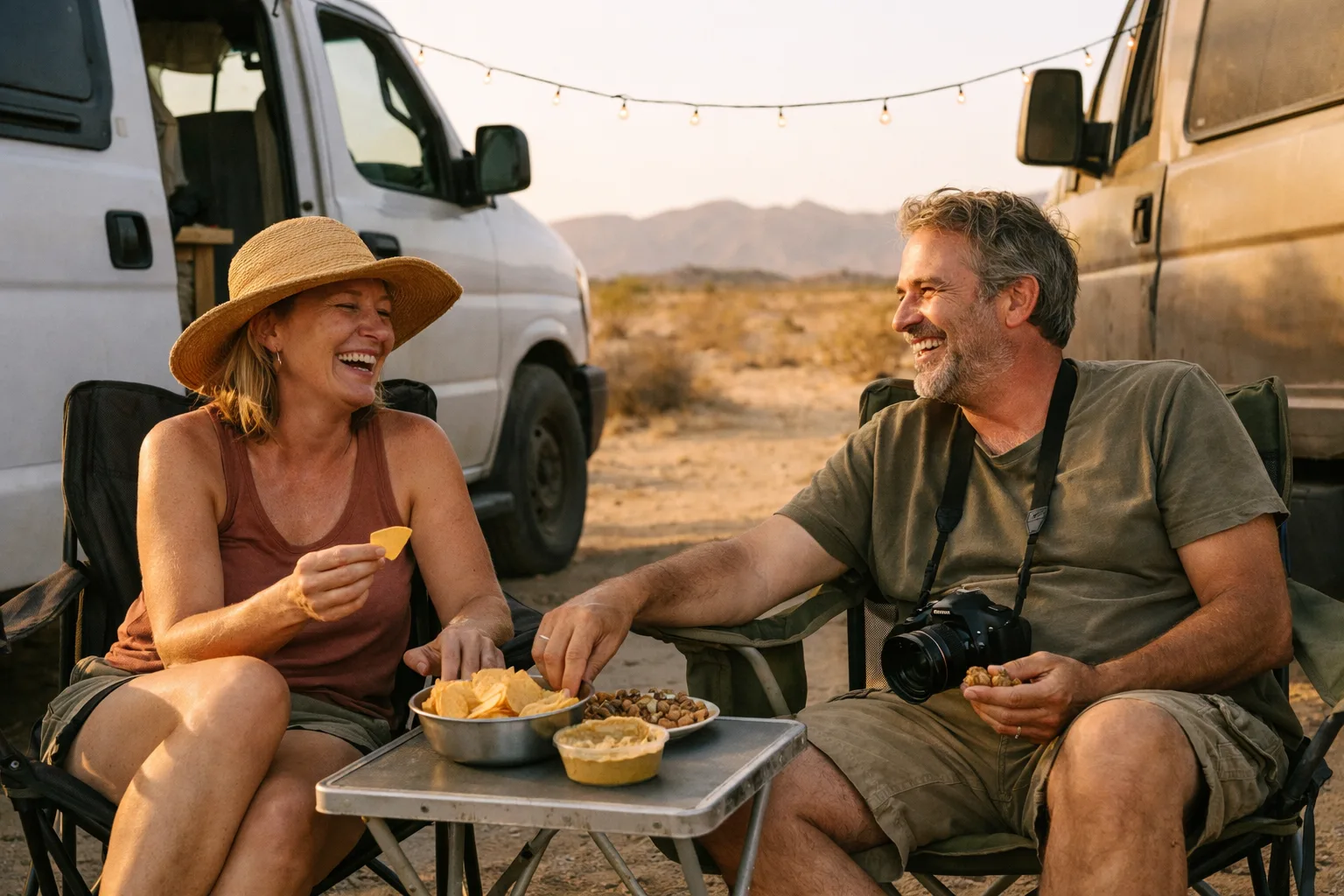
BLM land in the Southwest from November through March. Slab City in winter. Quartzsite in January. Baja in February. These aren't just good camping spots. They're where mobile people naturally cluster because the weather and the free camping pull everyone to the same areas at the same time.
You don't have to go to a formal gathering (though those help too). Just park where other converted vehicles are parked. The van life wave, the casual "cool setup" comment, the "is that a Dometic or an Iceco" conversation, these are the openers. Everyone out there knows the code.
2. Show up to gatherings in person
Events like Overland Expo, Descend on Bend, the Rubber Tramp Rendezvous, and dozens of smaller regional meetups exist specifically for this. They're not networking events. They're campouts where everyone already shares your lifestyle.
The barrier feels high if you're naturally introverted. But the beautiful thing about gatherings is that everyone there has the same problem you do. Nobody is going to think it's weird that a solo person wants to hang out. That's literally why they came.
3. Stay longer than you think you should
The nomad instinct is to keep moving. New state, new scenery, new campsite every few days. But friendships need time. If you roll into a spot and meet cool people, don't leave the next morning because your plan says "Flagstaff by Thursday."
Some of the best connections happen on day three, day four, day five. Once the surface-level "where are you from, what van do you have" conversation runs out and you start actually getting to know someone. You can't do that in 24 hours.
4. Use tools designed for mobile people
Regular social apps don't work for nomads. Bumble BFF matches you with people in a fixed radius who expect you to be there next week. Meetup groups are for locals. Facebook groups are online-only and full of people who are "thinking about van life someday."
The reason these don't work is that they assume a stationary life. What nomads need is a way to find other mobile people who are physically nearby right now and open to meeting up today.
5. Be the one who initiates
This is the hardest one. Walking up to someone's campsite and saying "hey, I'm going on a hike, want to come?" feels terrifying. But in the nomad world, it's not weird. It's welcome. Most people parked near you are having the exact same internal debate about whether to say hi.
You don't need a clever opener. "Hey, are you full-timing?" works. So does "nice rig, is that a DIY build?" So does literally just waving.
The Loneliness Is a Phase, Not a Verdict
Here's the most important thing: almost every long-term nomad will tell you that the loneliness peaks somewhere in months two through six. It's the adjustment period. Your old social infrastructure is gone and you haven't built the new one yet.
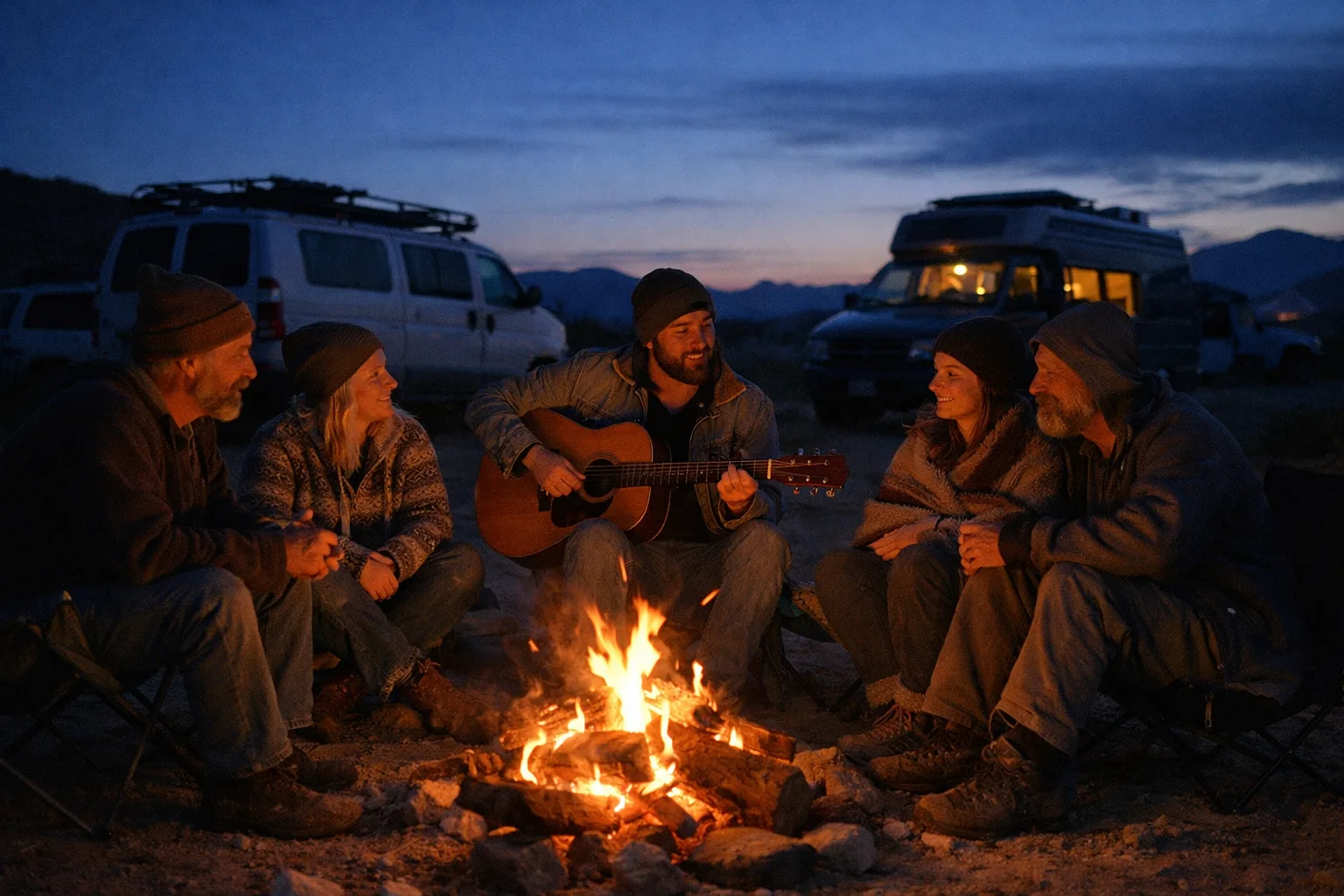
But the new one does get built. Slowly, unevenly, in a completely different shape than what you had before. Instead of a tight circle in one city, you build a scattered network across the country. People you can text "I'm in Moab" and get back "me too, campsite 7." People who understand why you live this way without you having to explain it.
That network is real and it's strong. But it takes time and it takes putting yourself in places where other nomads can find you.
"I'm looking for someone to travel with me, not stay in one spot. When I'm going to all these new locations and trying to date, it just kind of fails every time because I'm leaving and they're staying put."
— Quin Gable, van life creator
You're Not Alone in Feeling Alone
If you're reading this from a Walmart parking lot at 9 PM eating cold leftovers, know this: the loneliness you're feeling is not evidence that you made a bad choice. It's evidence that you're human and you need community, just like everyone else. The difference is that your community is mobile, which means it takes different tools to find them.
The nomads are out there. They're parked a quarter mile from you, having the same quiet evening, wondering if anyone nearby wants to grab coffee in the morning.
You just need a way to find each other.
Frequently Asked Questions
Is van life lonely?
Yes, van life is lonelier than most new nomads expect. More than 1 in 5 digital nomads report loneliness, and surveys consistently identify it as the #1 reason nomads return home. The loneliness comes from being constantly surrounded by people who are staying put while you keep moving, the fact that road friendships are temporary by default, and social media's distorted picture of nomad community. The good news: the loneliness is solvable, but it's not automatic — it requires deliberate community building.
How do van lifers cope with loneliness?
Experienced nomads cope with van life loneliness by: (1) going where other nomads already are — Quartzsite in winter, Bend in summer — instead of trying to find unique spots alone; (2) showing up to gatherings like Overland Expo, Descend on Bend, and RTR; (3) staying longer than feels productive when you find good people; (4) using purpose-built nomad apps with map-based discovery; (5) being the one who initiates — most nomads are equally community-starved and grateful when someone reaches out first.
When does van life loneliness hit hardest?
Van life loneliness hits hardest in two phases: weeks 2-6 of the first month (the "wall" phase, when the honeymoon ends but you haven't found community yet), and during shoulder seasons (October-November and April-May) when nomad density drops as people transition between summer and winter regions. Driving days and Sunday evenings are also disproportionately lonely. Knowing these patterns helps because most loneliness is temporary if you push through it.
How do you make friends as a full-time van lifer?
The most reliable ways to make friends as a full-time van lifer: attend at least one major gathering per year (Overland Expo, Descend on Bend, RTR); camp at known nomad clusters where you'll see other rigs daily; use apps like nomatch with verified nomad-only membership and map-based discovery; spend time at coworking spaces in nomad-popular towns (Bend, Sedona, Asheville); and follow through on every casual "let's meet up" offer. Friendship requires repeated proximity, and that means going where nomads go.
Does van life loneliness get better with time?
Van life loneliness improves significantly after the first 2-4 months for most nomads — once you've attended a gathering, met people in winter or summer hubs, and built a roster of road friends you cross paths with regularly. By year one, most full-timers have a stronger active social network than they did living in a fixed address, because nomad community is more deliberate. The nomads for whom loneliness doesn't improve are typically those who keep moving fast and don't invest in community — the lifestyle is what you make it.
Find nomads near you
nomatch is a verified community of van lifers, RV travelers, and digital nomads. See who's nearby, what they're down for, and connect.