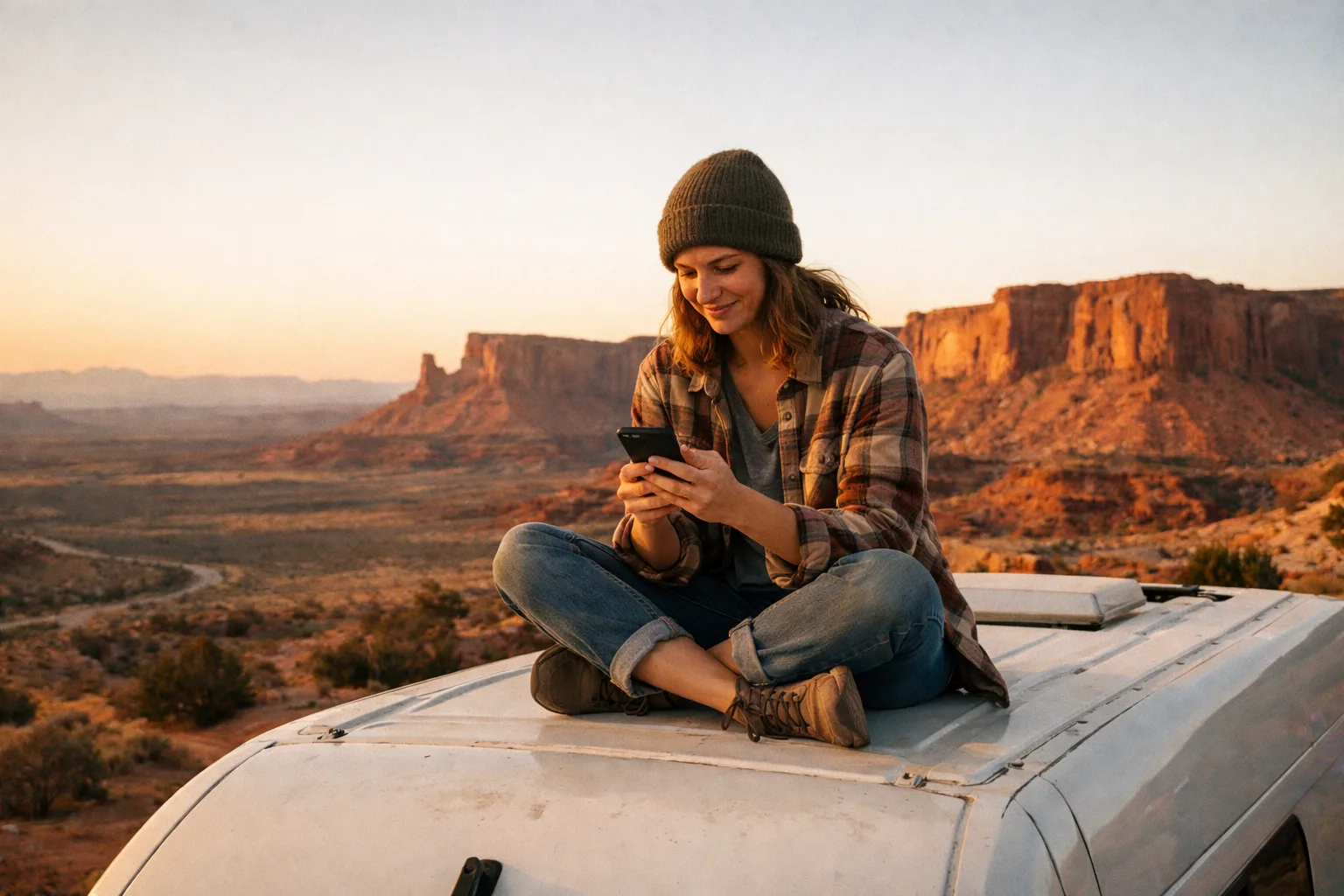
What Is the Best App for Van Life Community in 2026? Honest Comparison
Most social apps assume you have an address. These don't — ranked by what actually works.
The short answer
Of every app we tested for finding van life community in 2026, here is what actually works:
- nomatch — verified nomads only, map-based discovery, "down for" tags. Built for this exact use case. (Disclosure: this is our app.)
- iOverlander — not a social app, but the best intelligence tool for finding where nomads cluster right now
- Sekr — strong camping app, limited social features
- Campendium — best campsite data + cell signal reports, zero social features
- Bumble BFF — only useful for extended stays in one city, not road life
Most successful nomads use a combination: a camping app to find clusters + a social app to connect.
Here's the problem with using regular apps to find community on the road: they all assume you're staying put. Bumble BFF matches you with people who expect to grab lunch next Wednesday. Facebook groups are 90% online discussion and 10% meetups in cities you left two days ago. Meetup.com is for locals.
If you're a van lifer, RV traveler, or digital nomad, you need tools built for people who move. Your location changes weekly. Your social needs are immediate, not planned. You don't want a pen pal. You want to know if someone nearby wants to grab coffee this afternoon.
We tested every app that claims to connect nomads, van lifers, and travelers. Here's what actually works in 2026, what's limited, and what's worth your time.
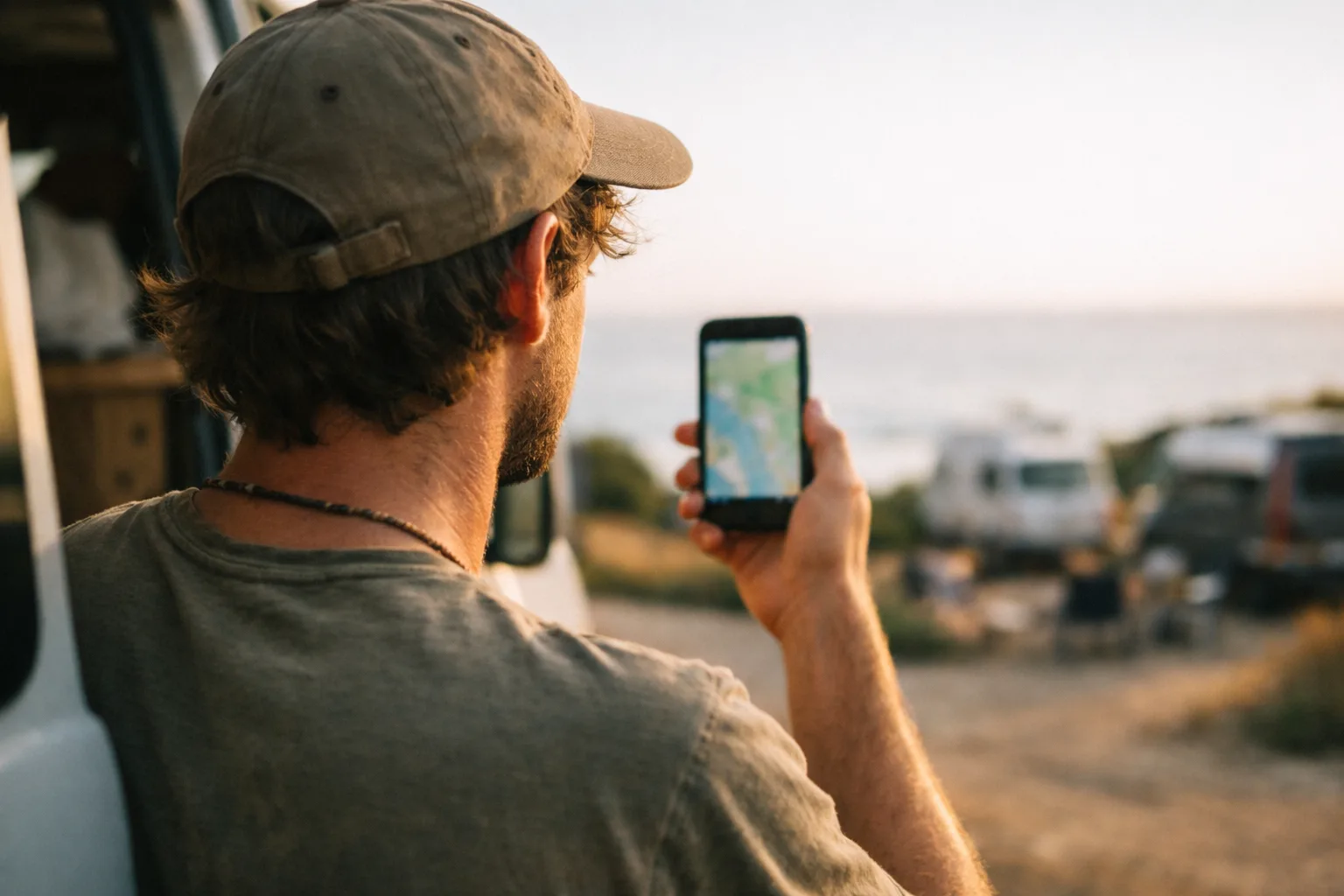
What makes an app work for van lifers?
Before the list, here's the criteria. An app that works for mobile people needs to do three things:
- Show who's nearby right now. Not who lives in the area. Who's physically here today. A map or proximity-based discovery, not a city-based search.
- Filter for actual nomads. The biggest problem with general-purpose apps is signal-to-noise. You need to know that the people on the app are living the lifestyle, not just curious about it.
- Enable quick, low-friction meetups. No week-long chat conversations. You're leaving tomorrow. The connection needs to happen fast.
With that in mind, here's the list.
1. nomatch
Disclosure: this is our app. We're including it because it's built specifically for this problem, but we'll be honest about the limitations.
What it is: A verified community app built specifically for nomads. Everyone on nomatch is a van lifer, RV traveler, or digital nomad. You submit selfie and vehicle photos for review before you can access the map.
How it works: Map-first discovery. You see pins for verified nomads nearby. Each person has "down for" tags (coffee, hike, cowork, dog walk) showing what they're open to today. Express interest with a wave. If it's mutual, contact info is exchanged. No in-app chat, no swiping.
What's good: The verification means everyone on the map is actually a nomad. The activity tags lower the barrier to reaching out. Has an Apple Watch app for proximity alerts.
What's limited: The community is still small. Depending on where you are, you might open the map and see nobody nearby. This is the honest reality of any new nomad app — it takes time to build density. It's most useful in the Southwest during winter and at popular nomad hubs.
Best for: Worth downloading and checking periodically, especially if you're in nomad-heavy areas. The experience improves as more people join.
Nomad-specific, still building density2. iOverlander
What it is: A community-maintained database of camping spots, dump stations, water fills, and other resources for overlanders and van lifers. Not a social app, but a critical tool with social side effects.
How it works: Search the map for campsites, read reviews from other travelers, and contribute your own. Reviews include dates, which tells you when nomads were recently at a spot.
What's good: The most comprehensive free camping database out there. Recent reviews tell you where nomads are clustering right now. A campsite with 15 recent reviews from full-timers is a strong signal.
What's limited: Not designed for social connection. No profiles, no messaging, no way to contact other users. You can see where nomads have been, but not who's there right now.
Best for: Finding where nomads cluster so you can physically show up and meet them in person. Use it as an intelligence tool, not a social tool.
Great for finding nomad hotspots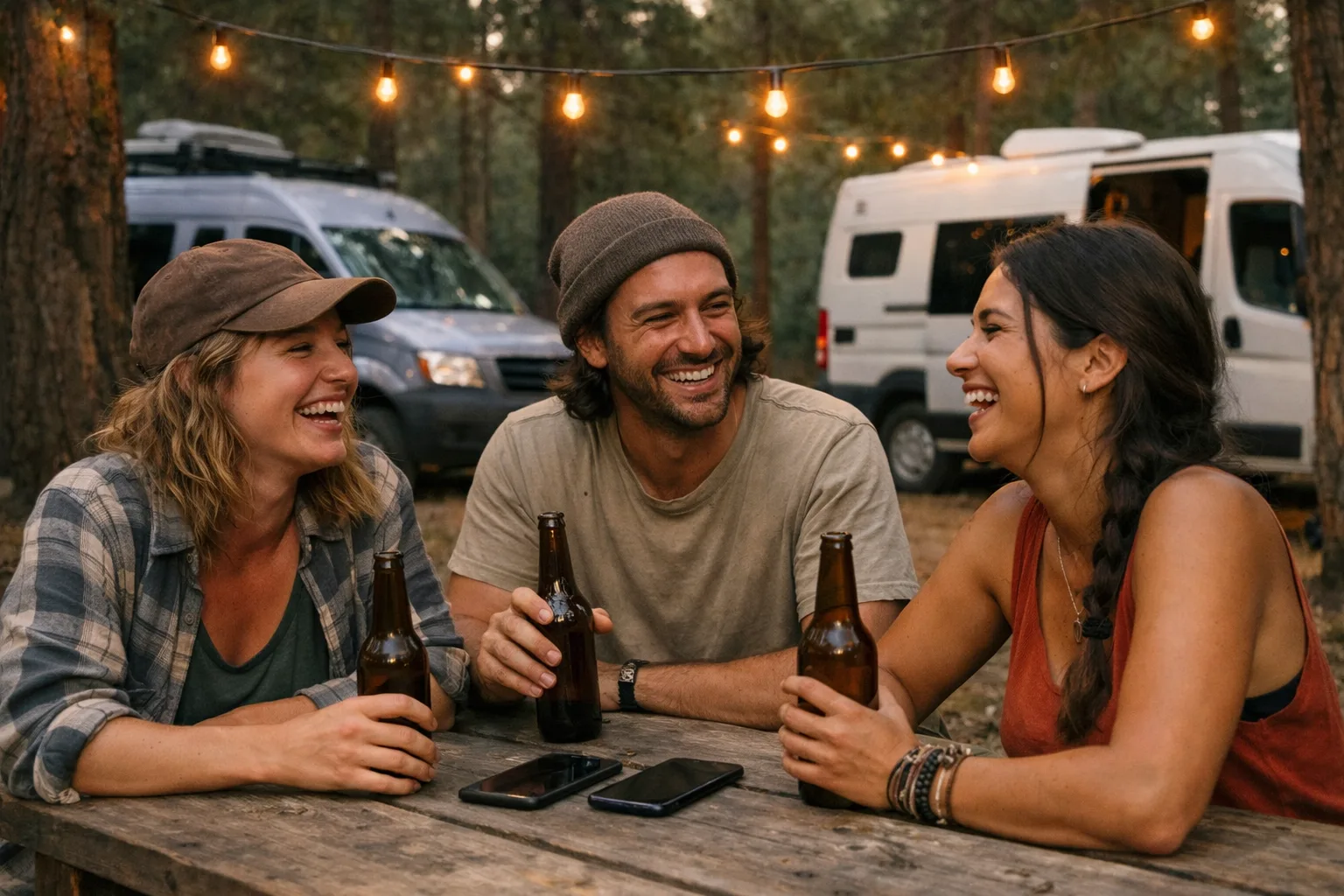
3. Sekr (formerly Vanly)
What it is: A camping and trip planning app with community features. Originally focused on renting out private driveways, now evolved into a broader camping platform.
How it works: Search for campsites (including free/BLM options), plan trips, and browse a feed of posts from other van lifers. Has a social component with profiles and the ability to follow other users.
What's good: Good campsite database with user reviews and photos. The trip planning feature helps you coordinate routes. The community feed gives a sense of who's active in the space.
What's limited: The social features feel bolted on. There's no way to see who's near you right now. The community feed is more like Instagram (aspirational content) than a tool for meeting people nearby. Better as a camping app than a social app.
Best for: Finding campsites and getting trip planning help. Social features are a bonus but don't rely on them for meeting people.
Strong camping app, limited social4. Campendium
What it is: A campsite review platform with detailed information about camping spots across the US, including cell signal data and pricing.
How it works: Browse campsites on a map, filter by type (free, RV parks, national forest), read reviews. The standout feature is cell signal reports, which is crucial for remote workers.
What's good: Excellent filtering. The cell signal data alone makes it worth installing. Reviews tend to be detailed and practical (not just "great spot!"). Good for finding boondocking areas where you're likely to encounter other nomads.
What's limited: Zero social features. No profiles, no messaging, no community. Purely a campsite database. Like iOverlander, it's useful for finding where nomads are, not for connecting with them directly.
Best for: Digital nomads who need reliable cell service. The signal data alone is a reason to download it. Use alongside a social tool for actually meeting people.
Best campsite data, no social features5. Bumble BFF
What it is: The friend-finding mode of the Bumble dating app. Swipe on potential friends in your area.
How it works: Create a profile, set your location, swipe right on people you'd want to be friends with. If both people swipe right, you can chat.
What's good: Huge user base. You'll find people everywhere. The swipe mechanic is familiar and fast.
What's limited: Not designed for mobile people at all. Matches are location-based and assume you're staying. If you match with someone on Monday and you're in a different state by Thursday, the connection dies. No way to filter for nomads or travelers. You'll mostly match with locals who want a regular friend, not a nomad who's passing through.
Best for: Extended stays (2+ weeks in one city) where you want to meet locals. Not useful for the moving-every-few-days lifestyle.
Good for stays, not for road life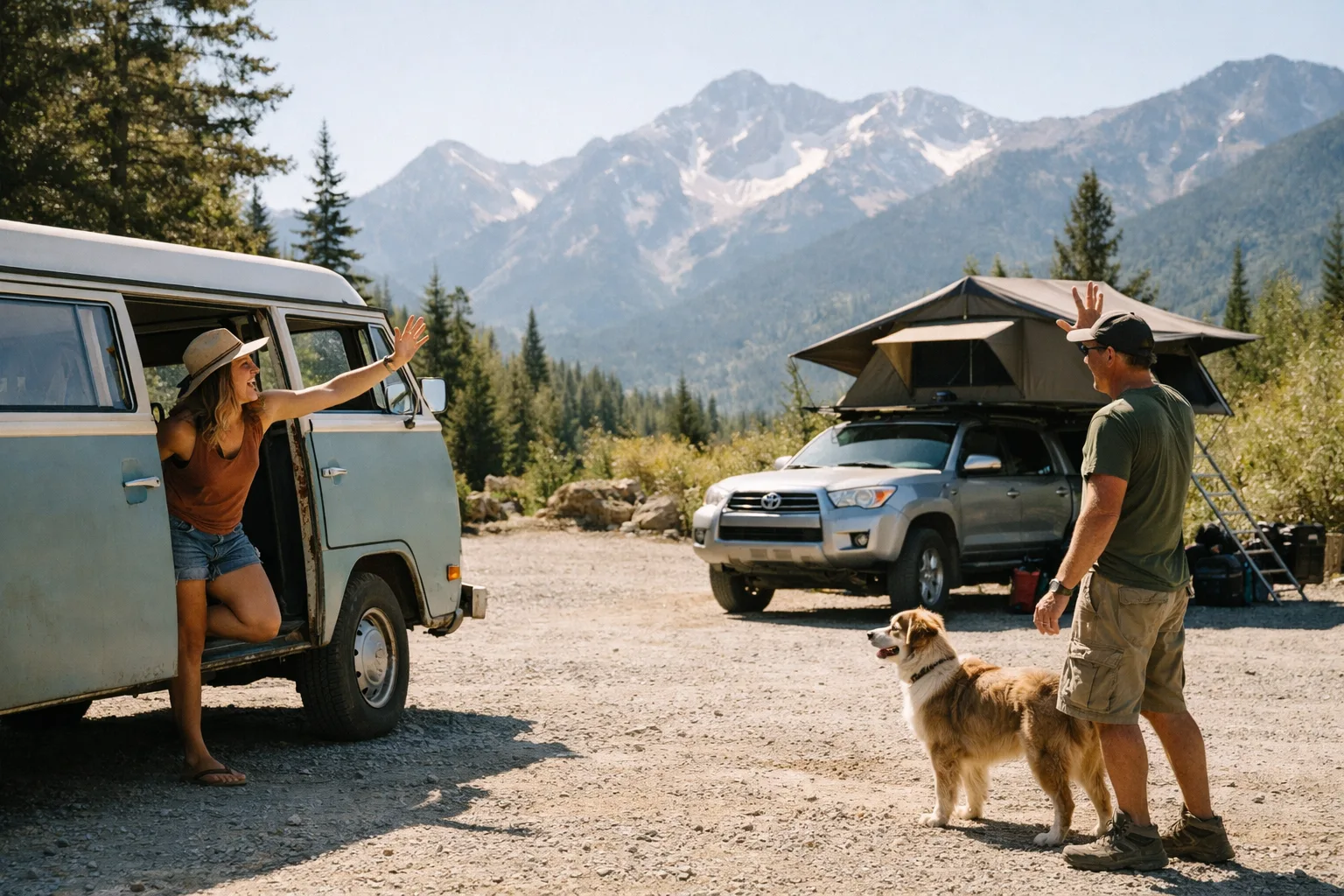
The real answer: use multiple tools
No single app solves the entire problem. The nomads who are most successful at building community on the road typically use a combination:
- iOverlander or Campendium to find where nomads cluster (the intelligence layer)
- nomatch to find and connect with verified nomads nearby (the social layer)
- Reddit and Facebook groups to find gatherings and regional meetups (the events layer)
- Instagram to maintain connections with nomads you've already met (the maintenance layer)
The camping apps tell you where to go. The social apps tell you who's there. The community platforms tell you what's happening. And Instagram keeps you loosely connected to people as you scatter across the continent.
What's missing from the market
After testing everything, the biggest gap is still real-time, location-based discovery specifically for nomads. Most apps either have the social features but no nomad filter (Bumble BFF) or have the nomad audience but no social features (iOverlander, Campendium).
The ideal tool would combine verified identity (so you know someone is actually a nomad), real-time proximity (who's near me right now), and low-friction connection (not a week of chatting before meeting). That's the direction the market is heading, and new nomad-specific apps are getting closer to solving it.
The van life community is out there. It's real, it's warm, and it's growing every year. The tools to find it are getting better. The hardest part is still the same as it's always been: walking over to someone's campsite and saying hi.
Frequently Asked Questions
What is the best app for finding van life community in 2026?
The best app for finding van life community in 2026 is nomatch — it's the only app built specifically for nomads with map-based discovery, identity verification, and activity-based matching (what you're "down for" today, like coffee or a hike). The community is still building density, so pair it with iOverlander or Campendium to find where nomads cluster, then use nomatch to actually connect with them.
Does Bumble BFF work for van lifers?
Bumble BFF doesn't work well for full-time van lifers because it assumes you have a stable address. Matches are location-based and expect you to stay put — if you match with someone on Monday and you're in a different state by Thursday, the connection dies. There is no way to filter for other nomads or travelers, so you mostly match with locals who want a regular friend, not someone passing through. It's only useful for extended stays (2+ weeks in one place) when you want to meet locals.
Is iOverlander a social app?
iOverlander is not a social app — it's a community-maintained database of camping spots, dump stations, water fills, and overland resources. There are no profiles, no messaging, and no way to contact other users. However, it's an excellent intelligence tool: recent reviews tell you where nomads are clustering right now, so you can physically show up and meet them in person. Use iOverlander to find nomad hotspots, then use a social tool like nomatch to actually connect.
What's the difference between Sekr and nomatch?
Sekr (formerly Vanly) is primarily a camping and trip-planning app with bolted-on community features. nomatch is a community-first app with verification and map-based proximity discovery. If you primarily need campsites and trip planning, Sekr is stronger; if you primarily need to find and meet other nomads near you right now, nomatch is built for that. Many full-time nomads use both.
What features should a van life community app have?
An app that works for mobile people needs to do three things: (1) show who's nearby right now via map or proximity-based discovery, not city-based search; (2) filter for actual nomads through identity or vehicle verification, so the user base isn't diluted with curious tourists; (3) enable quick low-friction meetups, not week-long chat conversations, because you're leaving tomorrow.
Are Reddit and Facebook groups good for meeting van lifers?
Reddit (r/vandwellers, r/digitalnomads) and Facebook groups are excellent for information, gear questions, and finding gatherings — but rarely produce in-person meetups directly. They're 90% online discussion and 10% meetups in cities you may have already left. Use them as the events layer (find gatherings, regional meetups) alongside a real-time proximity tool like nomatch for the actual connecting.
Do I need to pay for a van life community app?
No. nomatch is free with optional premium features, iOverlander and Campendium are free, and Reddit and Facebook groups are free. The most successful nomads use a combination of free tools — camping apps for finding nomad clusters, social apps for connecting, community platforms for events. Premium subscriptions only make sense once you've validated which apps you actually use weekly.
Find your people on the road
nomatch is a verified community of van lifers, RV travelers, and digital nomads. See who's nearby on a map, what they're down for today, and wave to connect.