
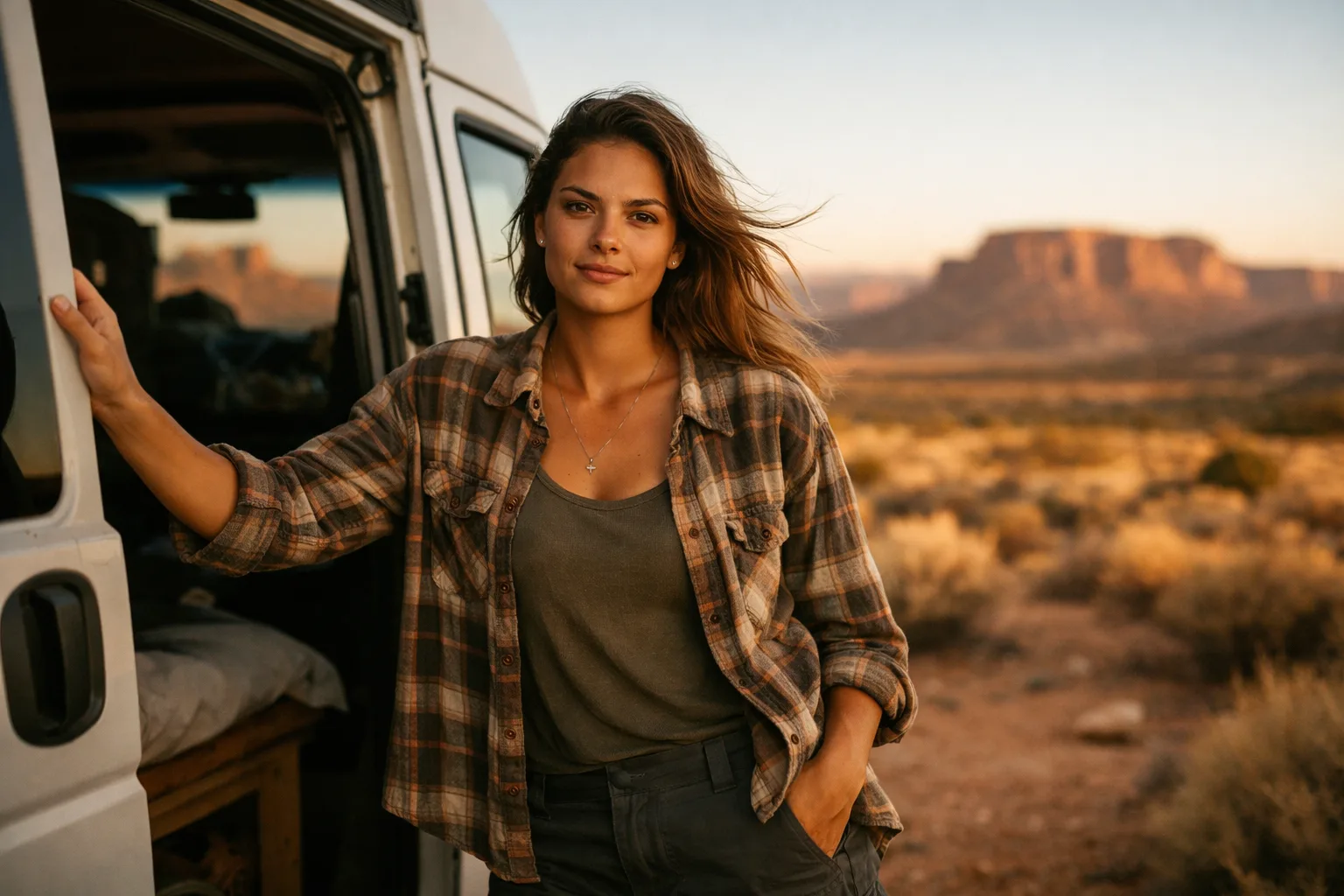
Is Solo Female Van Life Safe? An Honest 2026 Guide
The questions everyone asks, the fears that are valid, and the ones that aren't. From women who actually live on the road.
The short answer
Solo female van life is statistically safer than most people assume. The actual risks are mundane — weather, mechanical failures, isolation — not stranger violence. Effective safety practice rests on:
- Smart parking choices — lit, visible, populated areas (Walmart, BLM with other rigs, Harvest Hosts, paid campgrounds)
- Physical security layers — deadbolts, window covers, interior door alarms, AirTag on the van
- Trusting your gut to leave — the single most effective practice; leave any situation that feels off, even without justification
- Community as a safety net — women-only FB groups, RTR/HOWA gatherings, verified nomad apps, the loose caravan
- Bear spray — legal in nearly all US states, effective, no permit needed
Loneliness is a bigger long-term challenge than safety. Build community deliberately or burn out within a year.
"Is it safe?" is always the first question. Before "what van do you have" or "how do you afford it" or "what about showers." When a woman says she lives alone in a van, the conversation goes straight to safety.
It's a fair question. And the answer from women in the community who actually do this is more nuanced than either "it's totally fine" or "it's terrifying." The reality sits somewhere specific and practical in between, and it's worth talking about honestly.
More women are choosing solo van life every year. The community is growing, the resources are better than they've ever been, and the women doing it have a lot to say about what it's actually like. This is their collected wisdom.
The Fear vs. Reality Gap
Ask someone who has never lived on the road what the biggest dangers of solo female van life are, and you'll hear about serial killers, kidnapping, and attacks in remote locations. Ask women who actually live this way, and the list looks completely different.
Experienced solo female nomads consistently report that their biggest real-world challenges are mechanical breakdowns, extreme weather, finding safe overnight parking, and isolation. Not the dramatic threats that keep families up at night worrying.
This isn't to say that safety concerns are imaginary. They aren't. But the nature of the actual risks is far more mundane than most people assume, and the strategies for managing them are practical and learnable.
Safety Strategies That Actually Work
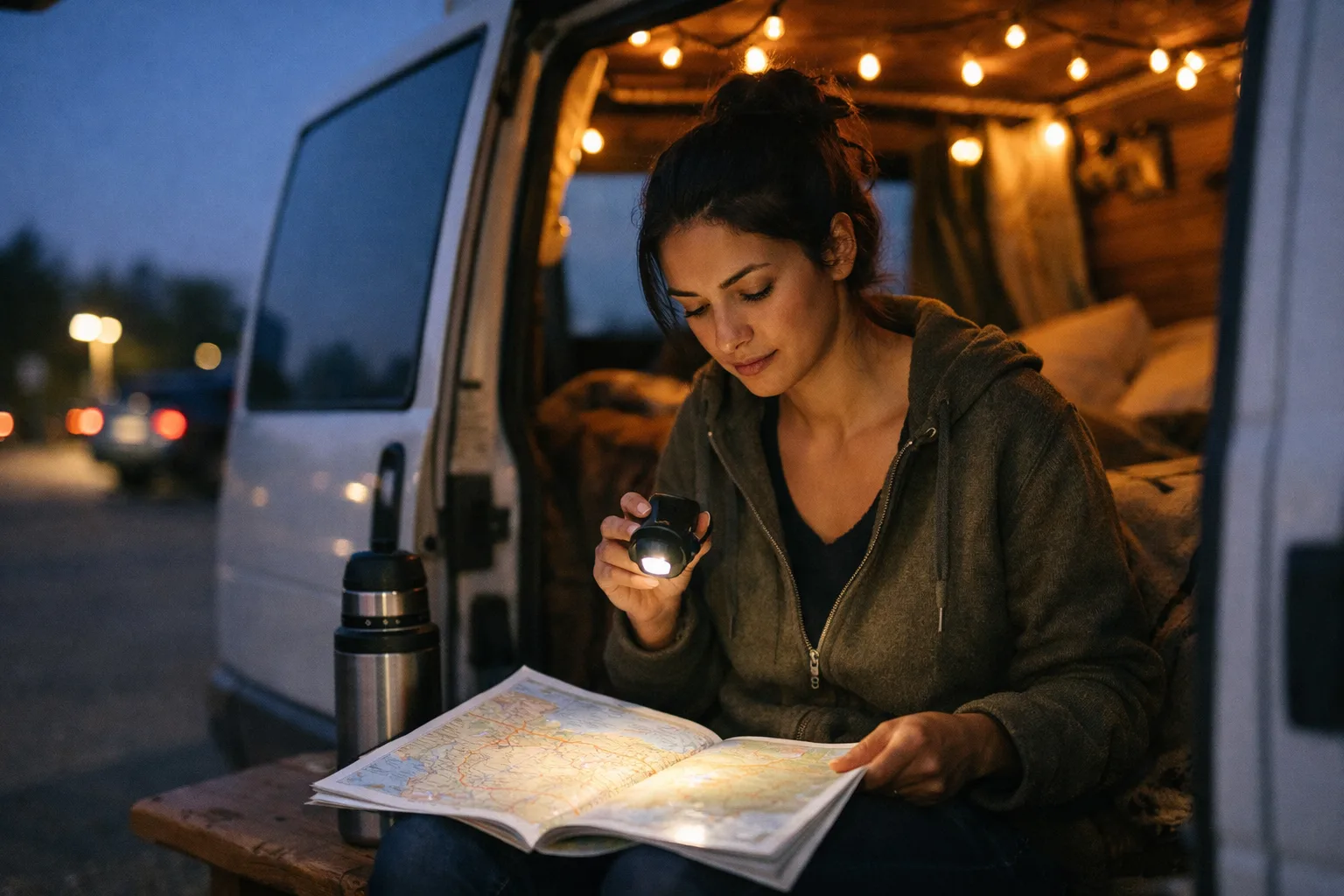
Women in the van life community have developed a deep playbook of real, tested strategies over years of living on the road. These aren't theoretical. They come from thousands of nights parked in every kind of location across the country.
Parking choices are everything
Where you park at night is the single biggest safety decision you make, and the approach depends on the type of camping.
- Stealth camping in towns: Well-lit, busy locations where there's foot traffic or other vehicles. Truck stops, 24-hour store lots, hospital overflow areas. The goal is to be unremarkable in a place where people come and go constantly.
- Boondocking in remote areas: Research the area in advance. Check recent reviews and reports from other campers. Arrive during daylight so you can assess the surroundings. Many women in the community recommend having a backup spot picked out in case the first one feels wrong.
- The 9 PM rule: A number of solo female nomads follow a practice of being parked and settled before dark. It removes the stress of searching for a spot at night and means you've already scoped the area in daylight.
Make your van look occupied, not solo
A practical tip that comes up constantly in women's van life circles: make it look like there might be more than one person inside. A pair of large boots by the door. Two camp chairs out. A large dog bowl visible. These are small signals that change the calculus for anyone with bad intentions.
Physical security layers
- Window covers that block all light. If nobody can see in, nobody knows who or how many people are inside.
- Secondary door locks. A deadbolt or security bar on the inside that's independent of the vehicle's factory locks.
- A dashcam or visible camera. Even a dummy camera creates deterrence.
- Noise deterrents. Many women keep a personal alarm or air horn within arm's reach at night. Loud and attention-grabbing beats almost everything else.
Trust your gut, always
This is the piece of advice that comes up more than any other from experienced solo female van lifers: if a spot feels wrong, leave. Don't rationalize it. Don't tell yourself you're being paranoid. Just drive to the next option. The cost of moving is a few miles of gas. The cost of overriding your instincts can be much higher.
Women in the community describe this as a skill that gets sharper over time. After a few months on the road, you develop an intuition for reading a location, reading people's body language, and knowing when to stay versus when to move on.
Community Is the Real Safety Net
The most powerful safety strategy in solo female van life isn't a product you buy or a technique you learn. It's other people.
The loose caravan
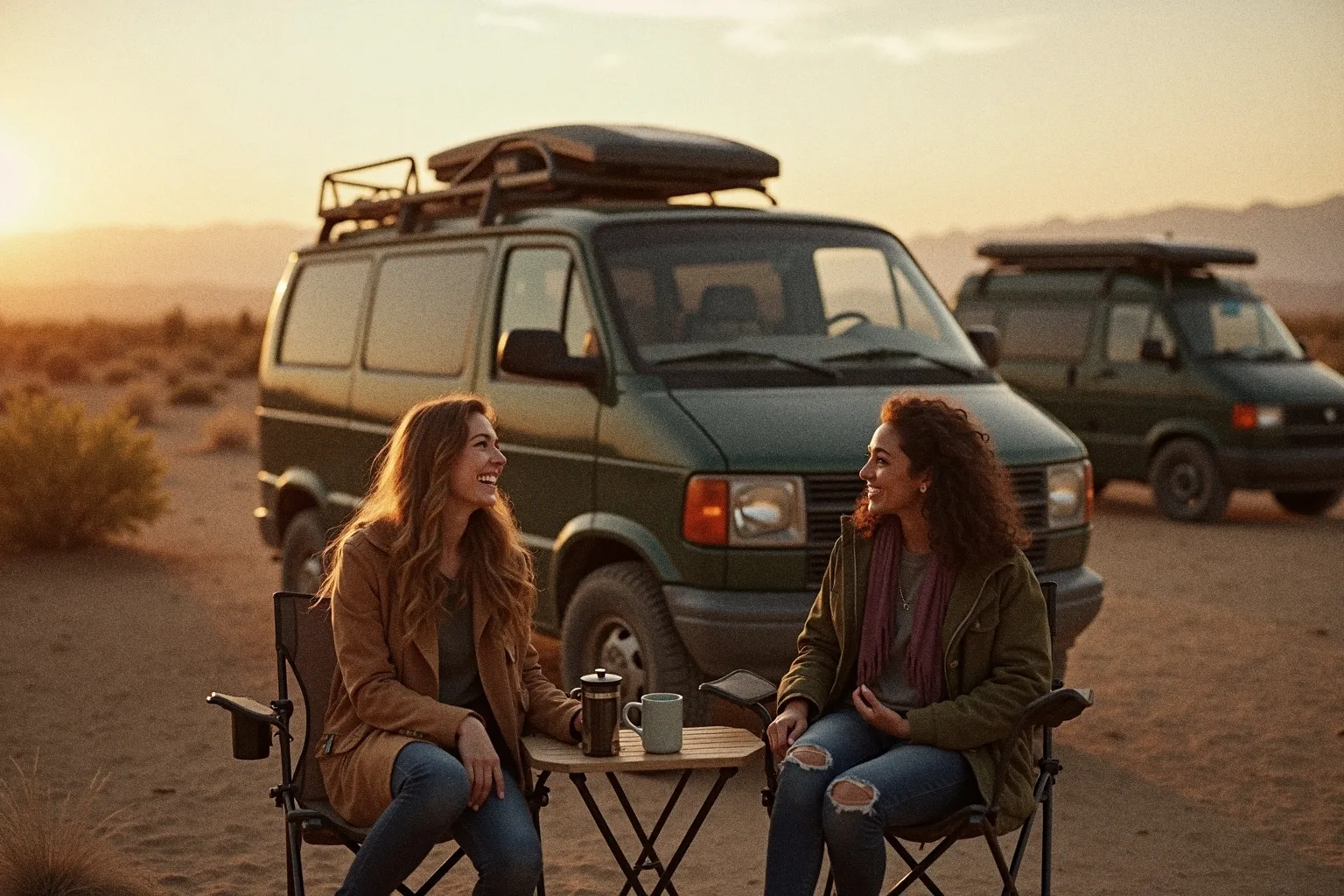
Many solo female nomads travel in what experienced van lifers call a loose caravan: two or three people moving in the same general direction, not necessarily caravanning bumper to bumper, but staying within a day's drive of each other. They check in, share intel on campsites, and park near each other when routes overlap.
It's the best of both worlds. You keep your independence, your own schedule, your ability to go where you want. But you also have someone who knows your rough location and will notice if you go quiet.
Check-in systems
Virtually every experienced solo female nomad has some version of a check-in system. It might be a daily text to a friend or family member. It might be sharing a live location with someone back home. It might be a buddy system with another van lifer where you each send a "parked safe" message each evening.
The specifics vary, but the principle is universal: someone who is not with you should always know your general location and expect to hear from you at regular intervals.
Women-specific communities and groups
There's a thriving network of online communities specifically for women living on the road. Facebook groups, forums, and social media accounts where women share routes, safety reports, campsite reviews, and general support. Many of these groups organize regional meetups and group camping trips throughout the year.
These spaces exist because women in the community built them. They're where you find unfiltered, experience-based advice from people who understand the specific context of being a woman alone on the road, without the well-meaning but unhelpful commentary that shows up in general van life spaces.
Gatherings and events
Nomad gatherings are one of the fastest ways to build a network. Events like the Rubber Tramp Rendezvous, Descend on Bend, and dozens of smaller regional meetups attract solo travelers of all kinds. Several gatherings now include women-specific sessions or camping areas.
For a solo female nomad, these events serve double duty. They're where you meet people, and they're where you meet the people you'll travel loosely with for the next few months. Many of the strongest caravan partnerships start at a gathering.
The Social Superpower Nobody Mentions
Here's something that experienced solo female van lifers talk about but that rarely makes it into the safety-focused articles: being a solo woman on the road comes with a social advantage that solo men often don't have.
People are more likely to approach, offer help, share a campsite, and include a solo woman in group activities. Families at campgrounds invite you to dinner. Other women flag you down to say hi. Couples offer to let you park near them.
This isn't about charity or pity. It's about the reality that a solo woman pulling into a campsite is generally perceived as approachable and non-threatening, which opens doors that can stay closed for others. Women in the community describe building social networks faster than they expected, precisely because people are inclined to welcome them in.
The flip side is that this openness requires the same gut-check discernment mentioned above. Most people who approach are genuine. But maintaining awareness of intentions is part of the skill set.
Why the Numbers Are Growing
More women are choosing solo van life now than at any point in the lifestyle's history. The reasons are practical and cultural.
- Remote work removed the income barrier. The single biggest obstacle to van life used to be earning money on the road. With remote work now standard across dozens of industries, that's no longer a dealbreaker.
- Visibility creates possibility. A decade ago, almost every van life story featured a couple. Now, solo female van lifers have massive followings on social media, showing other women that this is something you can do alone.
- The community infrastructure exists. Better resources, more women-specific groups, proven safety playbooks, and a critical mass of women already on the road means you're not pioneering anymore. You're joining a movement.
- The math changed. Rising rent in cities, combined with the ability to work remotely, means van life isn't just a lifestyle choice for some women. It's a financially rational one.
Frequently Asked Questions
Is solo female van life safe?
Solo female van life is statistically safer than most people assume — the most common real-world dangers are weather, mechanical failures, and isolation, not stranger attacks. Women who have done it for years consistently report that the actual risks they face are mundane: getting sick alone, breaking down in low-signal areas, or burning out from loneliness. Stranger violence is rare and typically preventable through smart parking choices and trusting your gut. The most effective safety practice is leaving any situation that feels off, even if you can't articulate why.
Where should solo female van lifers park overnight?
The safest overnight parking for solo female van lifers is in lit, visible, populated areas: 24-hour Walmart and Cracker Barrel parking lots, established BLM dispersed camping with multiple other rigs, paid campgrounds, Harvest Hosts wineries and farms, and truck stops with security cameras. Avoid isolated rest areas, dimly lit residential streets, and remote pullouts where you are the only vehicle. The single most important rule: if you arrive somewhere and your gut says "no," leave — even if it's late, even if you're tired.
What safety gear do solo female van lifers actually use?
The safety gear most solo female van lifers actually use: deadbolt locks on side and rear doors, window covers (privacy + cannot see in), an interior door alarm, AirTags or Tile trackers on the van itself, a personal location beacon (Garmin inReach Mini) for backcountry areas with no cell service, bear spray (legal in most US states and effective against humans), and a charged phone with someone who knows your rough route. Firearms are a personal choice with significant legal complexity across state lines.
How do solo female van lifers find community?
Solo female van lifers find community through several channels: (1) women-only Facebook groups like Solo Female Van Dwellers and Women's Vanlife Collective, (2) RTR (Rubber Tramp Rendezvous) and HOWA-affiliated gatherings in Quartzsite each January, which have a strong solo-female contingent, (3) regional meetups organized through state-specific FB groups, (4) verified nomad apps like nomatch where the membership filter reduces creep risk, and (5) the loose caravan — coordinating routes with another solo woman or couple you meet on the road.
Is solo female van life lonely?
Loneliness is the most underestimated challenge of solo female van life — it ranks higher than safety in surveys of women who have done it more than a year. The lifestyle has more solitude than most people anticipate, especially during driving days and shoulder-season nights. Women who succeed long-term build active community: weekly check-in calls with friends or family, scheduled co-camping with other nomads, meaningful conversation in coffee shops and coworking spaces, and gathering attendance. Without community, the loneliness becomes the reason most people return to fixed addresses.
Should solo female van lifers carry pepper spray or a firearm?
Bear spray and pepper spray are legal in nearly all US states, do not require permits, and are effective against humans without the legal consequences of firearm use. Most experienced solo female van lifers carry bear spray as a non-lethal first-line deterrent. Firearms are a more complex choice: they require concealed-carry permits that vary by state, most permits are not reciprocal across state lines, and using one carries legal exposure even in clear self-defense situations. If you choose to carry a firearm, get extensive training, study reciprocity laws, and store it secured.
How do solo female van lifers handle creeps and unwanted attention?
The most effective tactic against creeps is leaving early, before any escalation. Make the van look occupied by more than one person (men's boots outside, dual coffee cups, a "beware of dog" sticker even without a dog). Don't share real-time location publicly on Instagram. Don't open the door to anyone you don't know after dark, even with a knock that sounds official. Trust your gut without justifying it — the cost of leaving a "maybe" situation is one inconvenient drive; the cost of staying is unbounded. Women's Facebook groups frequently post "avoid this guy" warnings worth checking.
The Honest Version
Solo female van life is not for everyone. Neither is any lifestyle. The women who thrive at it tend to share a few traits: they're comfortable with solitude, they're willing to learn mechanical basics, they trust their instincts, and they actively build community rather than waiting for it to find them.
The fears that outsiders project onto solo female van life are mostly overblown. The fears that are real are manageable. And the payoff, according to the women who live this way, is a level of freedom and self-reliance that's hard to find anywhere else.
"The first week I was terrified every night. By the third month, I realized I'd never felt more capable in my life. You learn what you're made of out here."
— Shared sentiment across solo female van life communities
If you're a woman considering van life, the best advice from those already doing it is consistent: start. Take a weekend trip. Then a week. Build your confidence through experience, not through reading one more article. The road is more welcoming than you expect, and there are more women out here than you think.
You just have to find them.
Find your people on the road
nomatch is a verified community of van lifers, RV travelers, and digital nomads. See who's nearby and connect with other nomads wherever you are.