
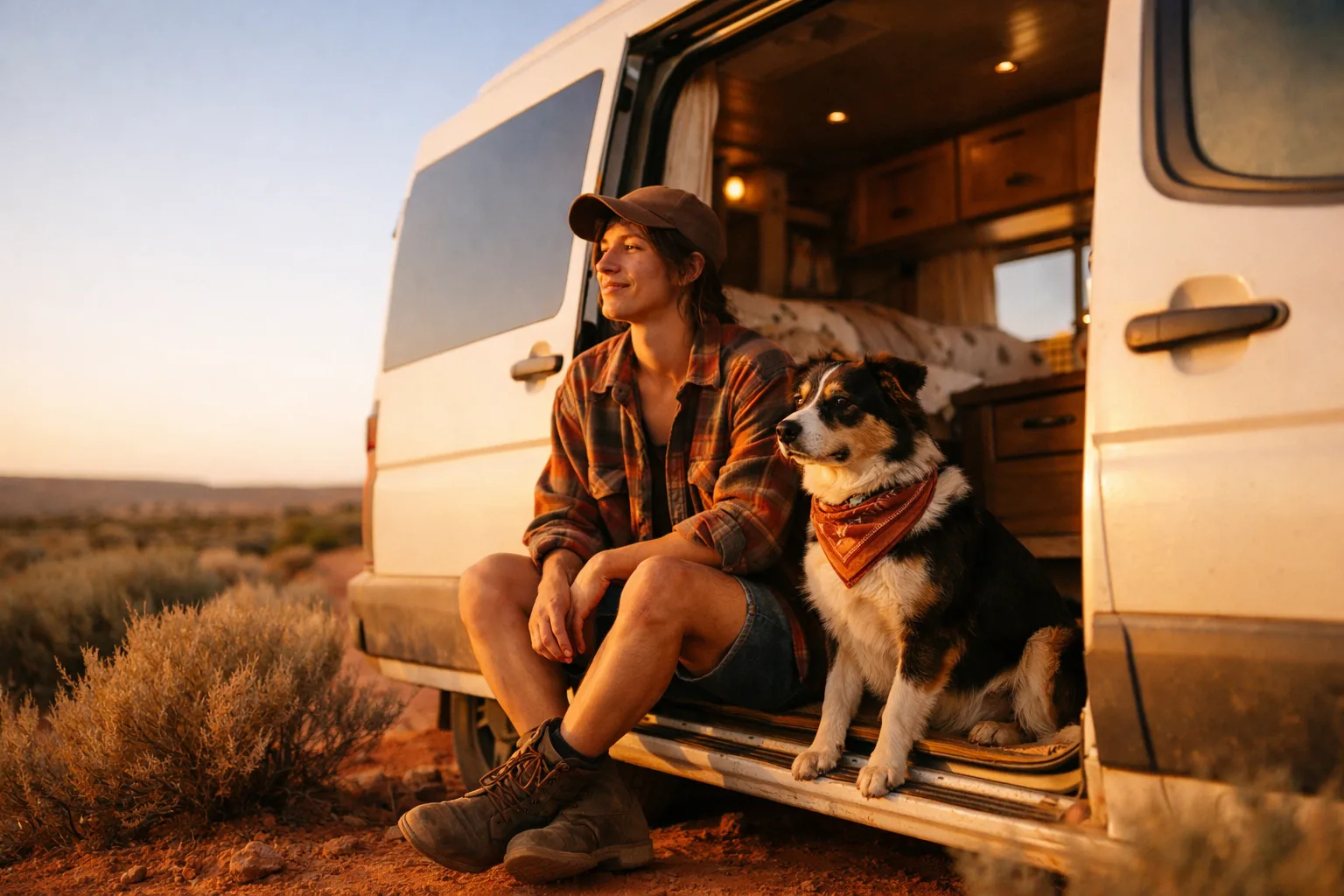
Van Life with a Dog: Heat, Camping & Routines
Your dog doesn't care about the view. But they do care about the routine you just destroyed.
You sold your apartment, built out a van, and hit the road with your best friend riding shotgun. Paws on the dashboard, ears flapping in the wind, living the dream. For about three days.
Then reality set in. Your dog threw up on the bed because mountain roads are not the same as a backyard. You couldn't go into that restaurant because it's 85 degrees outside and you can't leave them in the van. And the "dog-friendly" campground turned out to mean "dogs allowed if under 25 pounds and on a leash shorter than your patience."
Van life with a dog is one of the best things you can do. It's also one of the most logistically demanding. This guide covers what you actually need to know, not the Instagram version.
Temperature Management: The Non-Negotiable
This is the single most important topic in van life with a dog, and it's the one that will dictate your entire travel schedule. A van in direct sunlight can reach 120 degrees in 20 minutes. Your dog can't sweat. This isn't something you can wing.
Summer strategy
Most dog owners who van life full-time follow the weather religiously. In summer, that means being in the Pacific Northwest, the northern Rockies, or at elevation. If you're in the desert Southwest between June and September with a dog, you've made a mistake.
- Maxxair fan or equivalent is not optional. A good roof vent fan running on high can drop interior temps by 10-15 degrees. Not enough on its own in real heat, but essential as a baseline.
- Reflectix on all windows. Cut it to fit every single window. This alone makes a dramatic difference.
- 12V air conditioning exists now and it's gotten better. Units like the Zero Breeze or EcoFlow Wave work, but they drain batteries fast. You need serious solar or shore power.
- Park in shade. Obvious, but in practice this means choosing campsites based on tree cover, not views. Your dog doesn't care about the vista.
- Never leave your dog in the van when it's above 70 degrees outside. Period. This means grocery runs, restaurant meals, and errand days require planning. One of you stays with the dog, or the dog comes.
Winter strategy
Cold is easier to manage than heat. Dogs have fur. A good blanket, an insulated van, and a diesel heater solve most winter problems. The bigger issue in winter is wet paws and mud tracked through a very small living space. A towel by the door becomes your most-used item.
Finding Dog-Friendly Camping
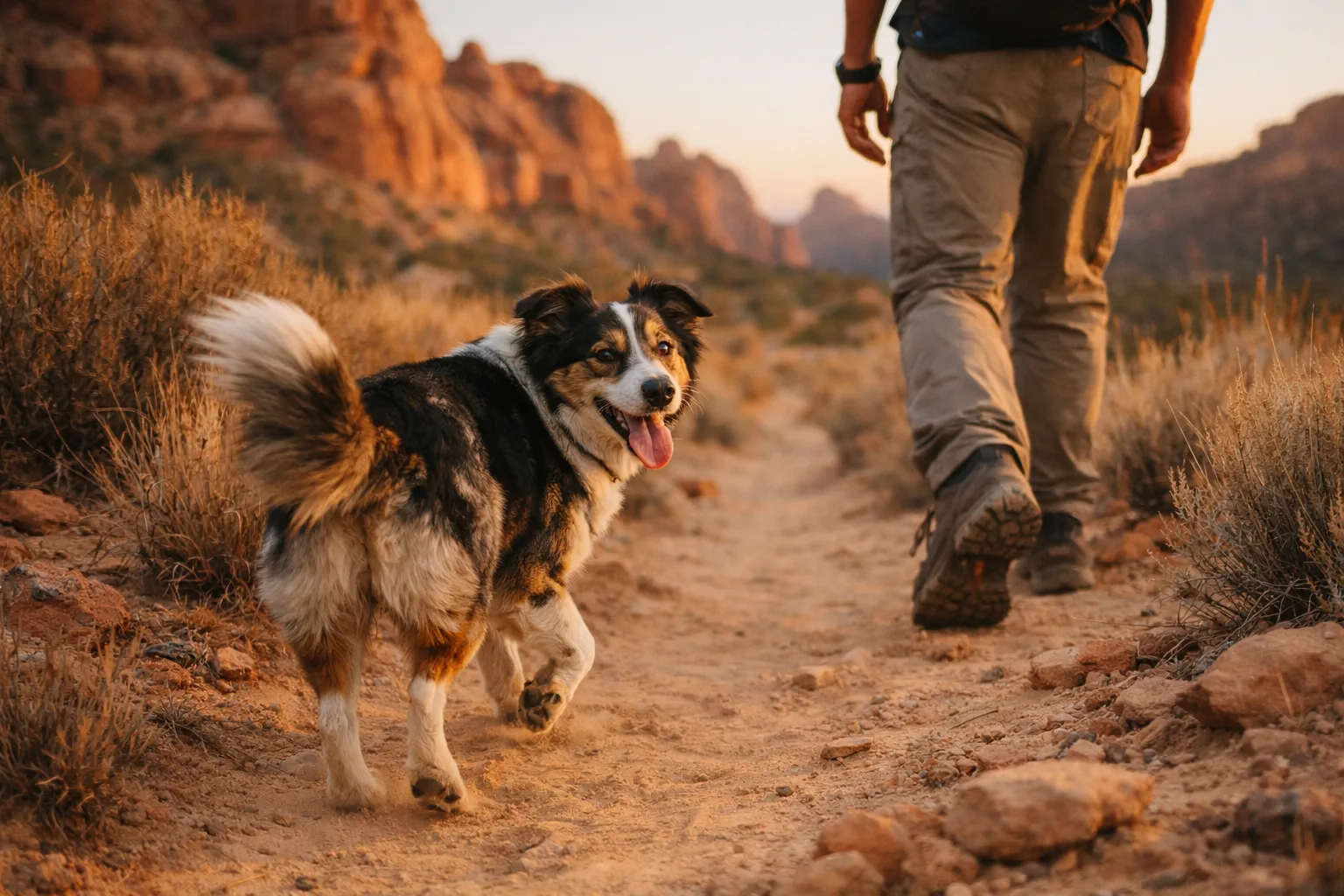
Here's the good news: the best camping for van lifers also happens to be the most dog-friendly. BLM land, national forest dispersed camping, and most boondocking spots have zero restrictions on dogs. No leash laws, no breed restrictions, no weight limits. Your dog can run free while you drink coffee and watch the sunrise.
Where it gets complicated
- National parks are the worst for dogs. Most don't allow dogs on trails, in buildings, or away from paved areas. They're essentially dog-free zones. Plan accordingly or skip them.
- Private campgrounds vary wildly. KOA is generally dog-friendly. State parks usually allow dogs on leash. But some have breed restrictions (pit bulls, Rottweilers, German Shepherds) or size limits that seem arbitrary.
- City and county parks often require leashes and have restricted hours. Not ideal for a dog that needs to run.
The BLM land advantage
This is why so many van lifers with dogs gravitate toward the West. Millions of acres of Bureau of Land Management land where you can camp for free, stay for up to 14 days, and your dog can be a dog. No reservation, no fees, no "please keep your pet on a six-foot leash at all times."
If you're planning van life with a dog, route your travels through BLM-heavy states: Utah, Arizona, Nevada, New Mexico, Colorado, Oregon, California. Your dog will thank you by being exhausted and happy every single night.
Exercise on the Road
A tired dog is a happy dog, and in a van, a tired dog is an essential dog. There's not a lot of room for zoomies inside a Sprinter.
Daily routine
Most van lifers with dogs develop a rhythm: morning hike or long walk before it gets hot, midday rest in the van (or under the van, where it's cooler), and an evening play session. The beauty of van life is that you're usually parked somewhere with instant trail access. No driving to the dog park. Just open the door.
Swimming
If your dog likes water, seek out lakes, rivers, and creeks. Swimming is the best exercise for dogs because it tires them out completely without the joint impact of running on hard ground. Plus it handles the bath situation. A dog that swims every day is a surprisingly clean dog.
Rest days
Dogs need rest days too, especially if you've been doing big hikes. On rest days, a long-line tether at camp gives them room to explore without needing constant supervision. A 30-foot lead clipped to a ground anchor lets them sniff around while you work or read.
Vet Care on the Road
This one scares people more than it should. Veterinary care while traveling is very manageable if you plan for it.
Routine care
- Banfield Pet Hospital has locations inside PetSmart stores nationwide. Their Optimum Wellness Plan travels with you. Get one.
- VCA Animal Hospitals are another nationwide chain. Records transfer between locations.
- Keep digital copies of everything: vaccination records, medications, any chronic conditions. Store them in your phone and in cloud storage.
Emergencies
- ASPCA Animal Poison Control: save the number (888-426-4435). They charge a consultation fee but it's worth it when your dog eats something weird in the desert.
- Emergency vet apps: apps like PetDesk and the AAHA hospital finder can locate the nearest emergency vet wherever you are.
- Pet insurance: Nationwide coverage matters more when you're literally nationwide. Healthy Paws, Embrace, and Trupanion all work across state lines with no network restrictions.
Common road hazards
Cactus spines (the Southwest), foxtails (California grasslands), rattlesnakes (everywhere warm), and ticks (everywhere humid). Learn the hazards for wherever you're headed. A rattlesnake vaccine exists and it's worth discussing with your vet if you spend time in snake country.
The Social Superpower
Here's the part nobody talks about enough: a dog is the single best social tool in the nomad world.
Walking through a campground alone, people might wave. Walking through a campground with a dog, people walk over. "Can I pet your dog?" is the unofficial greeting of every campsite in America. It leads to conversations, invitations, shared meals, and friendships that would have taken three times longer to develop without the four-legged icebreaker.
Dog owners in the van life world find each other fast. You're already bonded over the shared insanity of managing an animal in a moving house. The conversations start at "what breed?" and end three hours later comparing diesel heater installations.
This is especially true for solo travelers. If loneliness is the shadow side of van life, a dog is both the cure and the bridge. They keep you company during the quiet stretches, and they draw other people toward you during the social ones.
Space Considerations
Let's be honest: a Great Dane in a minivan camper isn't going to work. But the question of dog size vs. van size is more nuanced than you'd think.
It's about activity level, not just size
A 60-pound lazy dog takes up less functional space than a 30-pound hyperactive one. A calm dog that sleeps 14 hours a day is a great van dog regardless of size. A Border Collie who needs four hours of stimulation per day is going to be challenging in any vehicle unless you're committed to providing that.
Practical setup
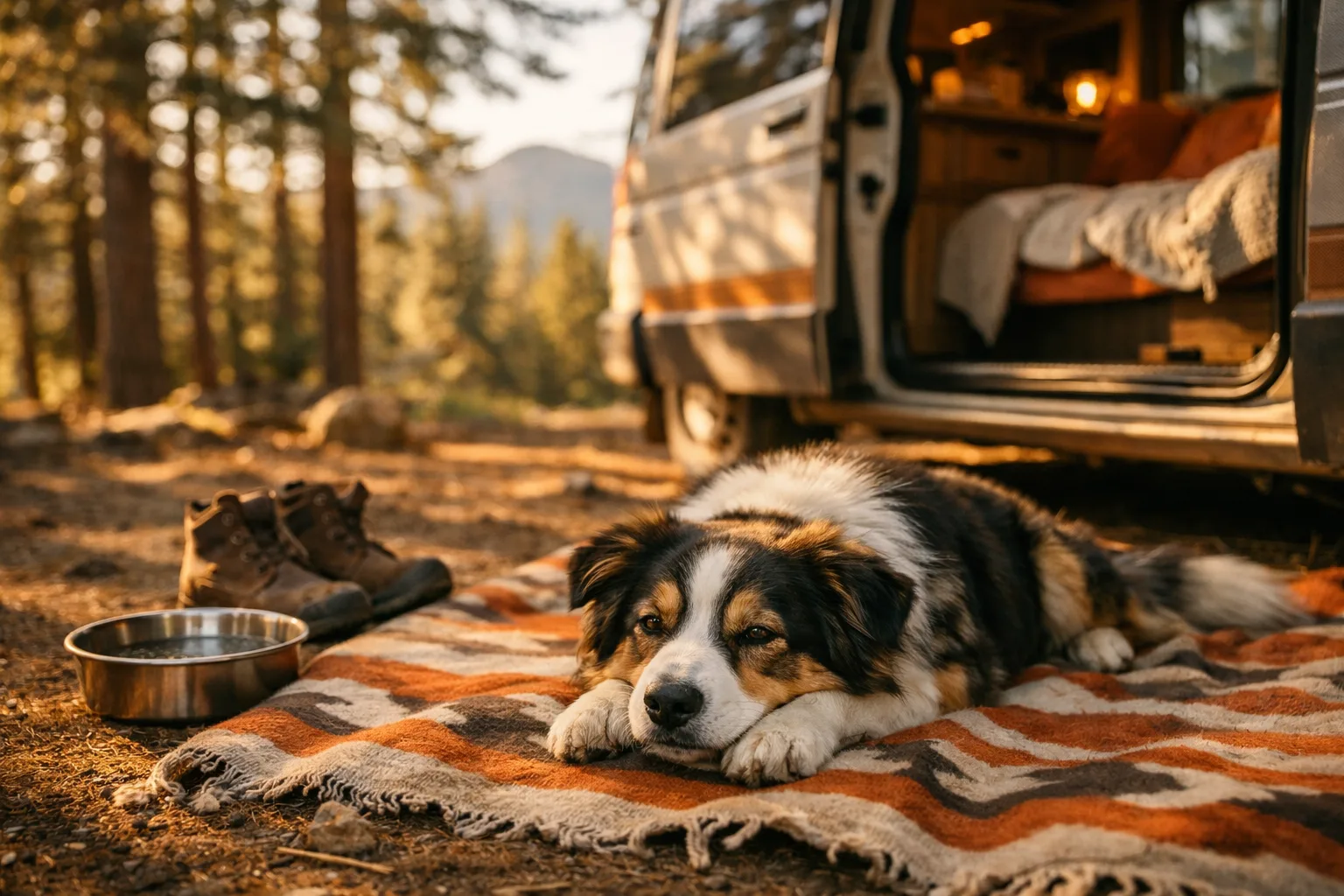
- Dedicated dog bed space. This is their spot. Under the bed platform, in a corner, wherever works. They need a place that's theirs.
- Water and food station that won't spill while driving. Spill-proof bowls or a mounted water dish saves you from mopping the floor daily.
- Mudroom area. Even if it's just a towel and a small mat by the door, having a transition zone between outside and inside keeps the van livable.
- Seatbelt harness or crate for driving. A loose dog in a moving vehicle is dangerous for both of you. Crash-tested harnesses from Sleepypod or Kurgo are the way to go.
The Honest Truth
Van life with a dog means you'll skip some things. You'll drive past that restaurant you really wanted to try because you can't leave the dog. You'll choose the shady campsite over the one with the view. You'll plan your entire summer route around staying below 80 degrees.
But van life with a dog also means you'll gain things no Instagram post can capture. A hiking partner who never cancels. A reason to stop at every swimming hole. A warm body curled against you during cold desert nights. And a constant reminder that adventure isn't about the destination. It's about whoever is sitting next to you when you get there.
Your dog didn't ask for this life. But if you do it right, they'll thrive in it. More exercise, more stimulation, more time with you than they'd ever get in a house where you leave for eight hours a day. Most van life dogs are the happiest dogs you'll ever meet.
You just have to be willing to plan around them. They're worth it.
Frequently Asked Questions
Is van life good for dogs?
Yes, van life is generally great for dogs — most full-time nomad dogs get more daily exercise, more time with their humans, more new sniffs, and fewer hours alone than dogs in a fixed-address home. The downsides are heat management (the most serious risk), changing routines that anxious dogs may struggle with, and the logistics of vet care across state lines. Dogs that handle car travel well and don't have severe separation anxiety thrive on the road; dogs that hate car rides are tougher fits.
How do you keep a dog cool in a van during summer?
Keeping a dog cool in a van in summer requires layered solutions: (1) follow the weather — go north or to elevation by June, never park in lowland deserts in summer; (2) install a 12V roof vent fan with a thermostat; (3) use Reflectix or insulated window covers to block sun; (4) install a temperature monitor with phone alerts (Waggle, MarCELL) so you know if conditions deteriorate while you're away; (5) for working nomads, run a 12V air conditioner off lithium batteries on solar; (6) when in doubt, take the dog with you instead of leaving them. Heatstroke kills more nomad dogs than any other cause.
Where can you camp with a dog in a van?
Most van-friendly camping is also dog-friendly: BLM dispersed camping (off-leash typically allowed in most areas), National Forests (leash rules vary by district), most state parks, paid private campgrounds, and Harvest Hosts farms and wineries. Where it gets complicated: National Parks (dogs typically allowed only in developed areas, banned from trails), some county parks, and many beaches in California. Use BringFido and the AllTrails "dog-friendly" filter to scout ahead.
How do van lifers handle vet care on the road?
Van lifers handle vet care on the road by: (1) keeping vaccinations current with a primary vet who issues a multi-year health certificate; (2) using national chains like Banfield (PetSmart) or VCA that share records across locations; (3) building a list of mobile vets and emergency vets along common routes; (4) carrying a thorough first-aid kit including activated charcoal, Benadryl, and sterile saline; (5) maintaining pet insurance for the inevitable unexpected emergency — a Sunday-night ER visit in a strange town can run $2,000+. Don't skip insurance.
Is van life lonely with just a dog?
A dog reduces but does not eliminate van life loneliness. Dogs are excellent for the daily structure they impose, the conversation-starting magnetism at trailheads and campgrounds, and the unconditional companionship — many nomads describe their dog as the single biggest factor in handling solo life on the road. However, dogs don't replace human connection, and van lifers who rely solely on their dog for social needs typically burn out within a year. A dog plus deliberate community building (gatherings, apps, repeat-route caravans) is the durable combination.
Find dog-friendly nomads near you
nomatch is a verified community of van lifers, RV travelers, and digital nomads. See who's nearby and what they're down for.